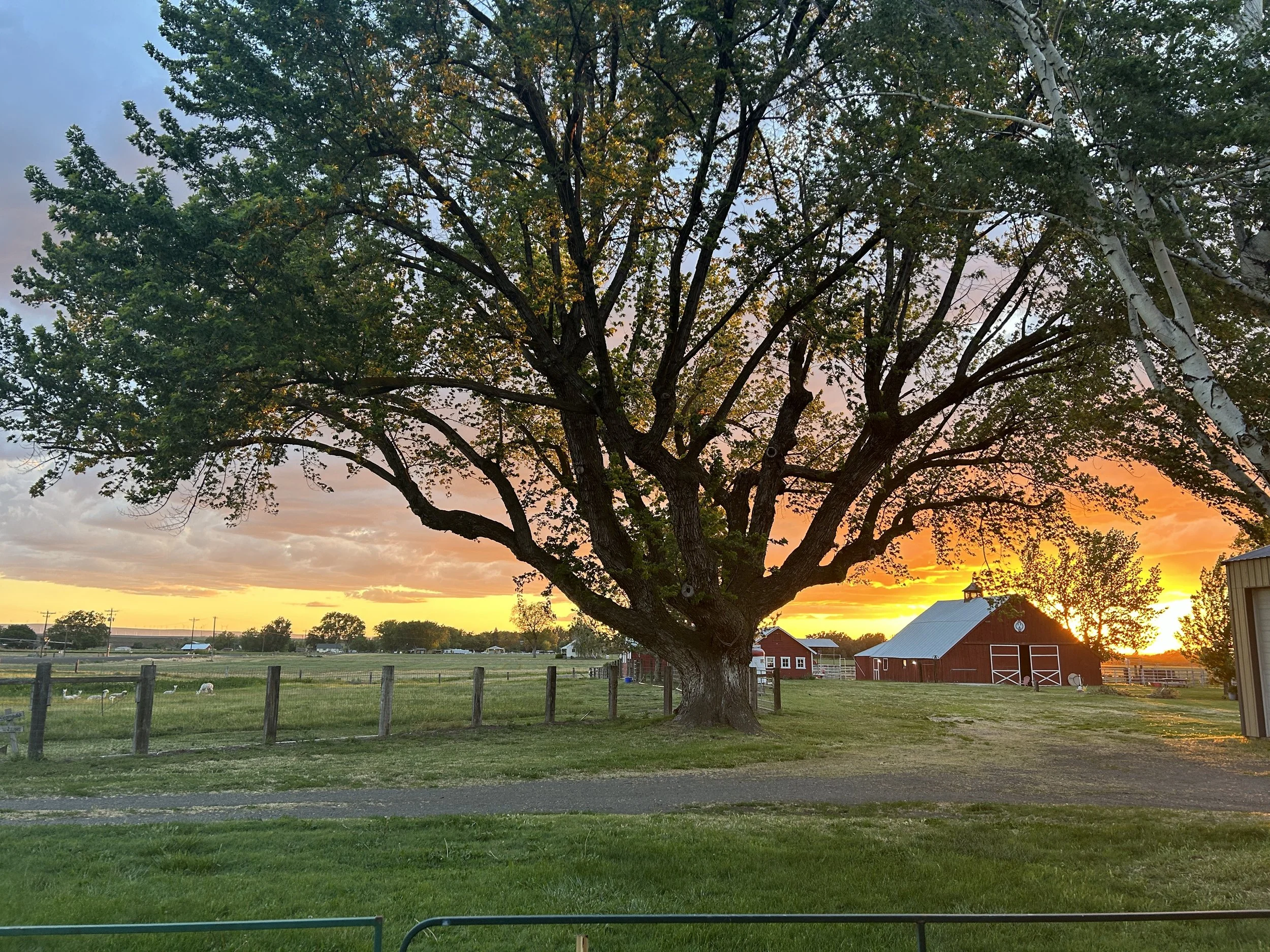
alpacas, flowers & a legacy
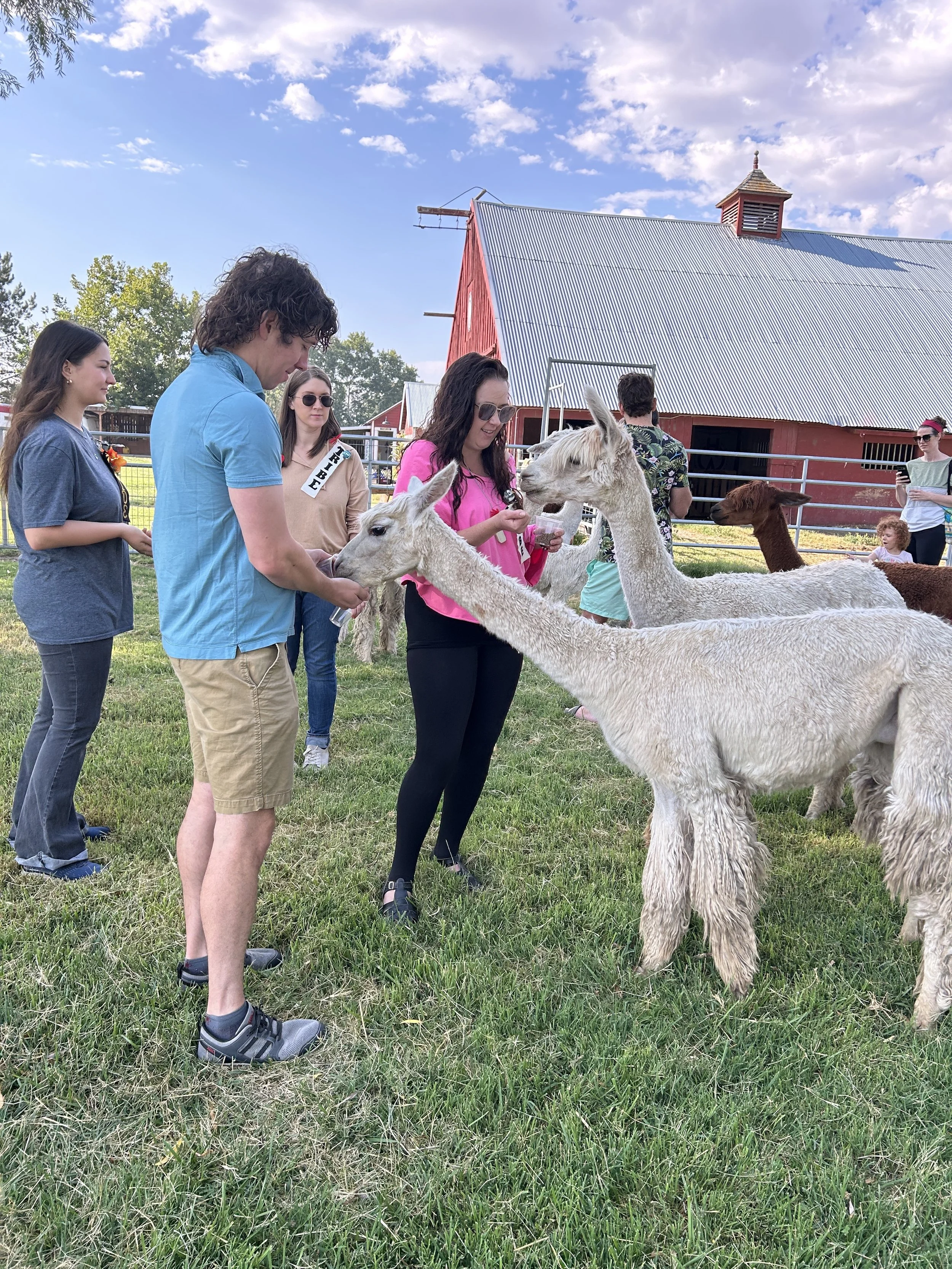
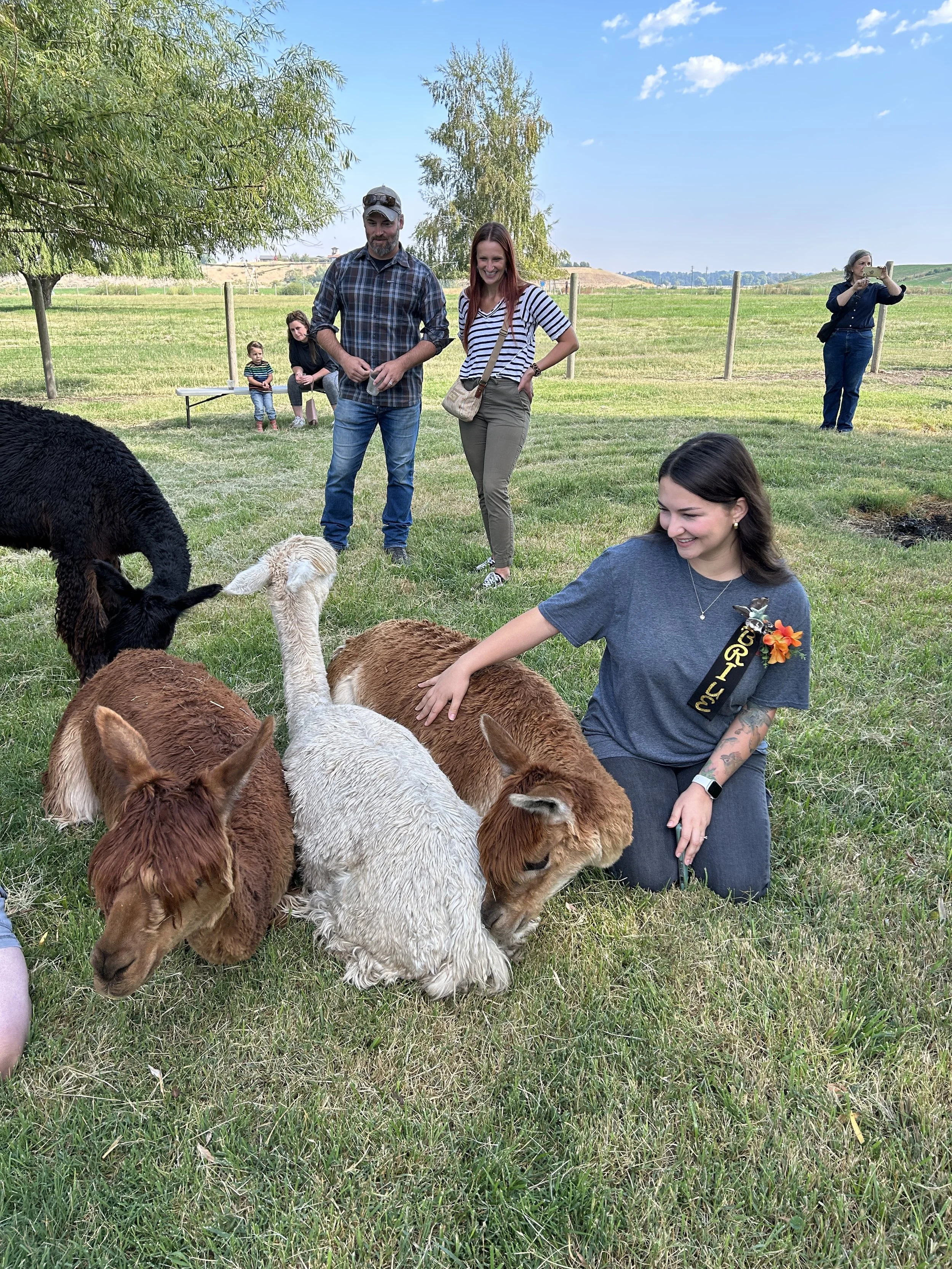
If you come out to the farm in early summer, maybe for a workshop, a bouquet pickup, or Yoga with Alpacas, when you arrive, you’ll probably hear the alpacas before you see them.
And if the timing’s right you might catch the scent of peonies from the garden. In the barn, you might see we’ve been moving hay, and juggling chores in between events and flowers harvests. That’s where most folks realize just how many pieces have to work together to keep this place running.
Because around here, we don’t just raise animals or grow plants.
We grow a farm that depends on people.
The Alpacas: Where It All Started
Alpacas were the first thing.
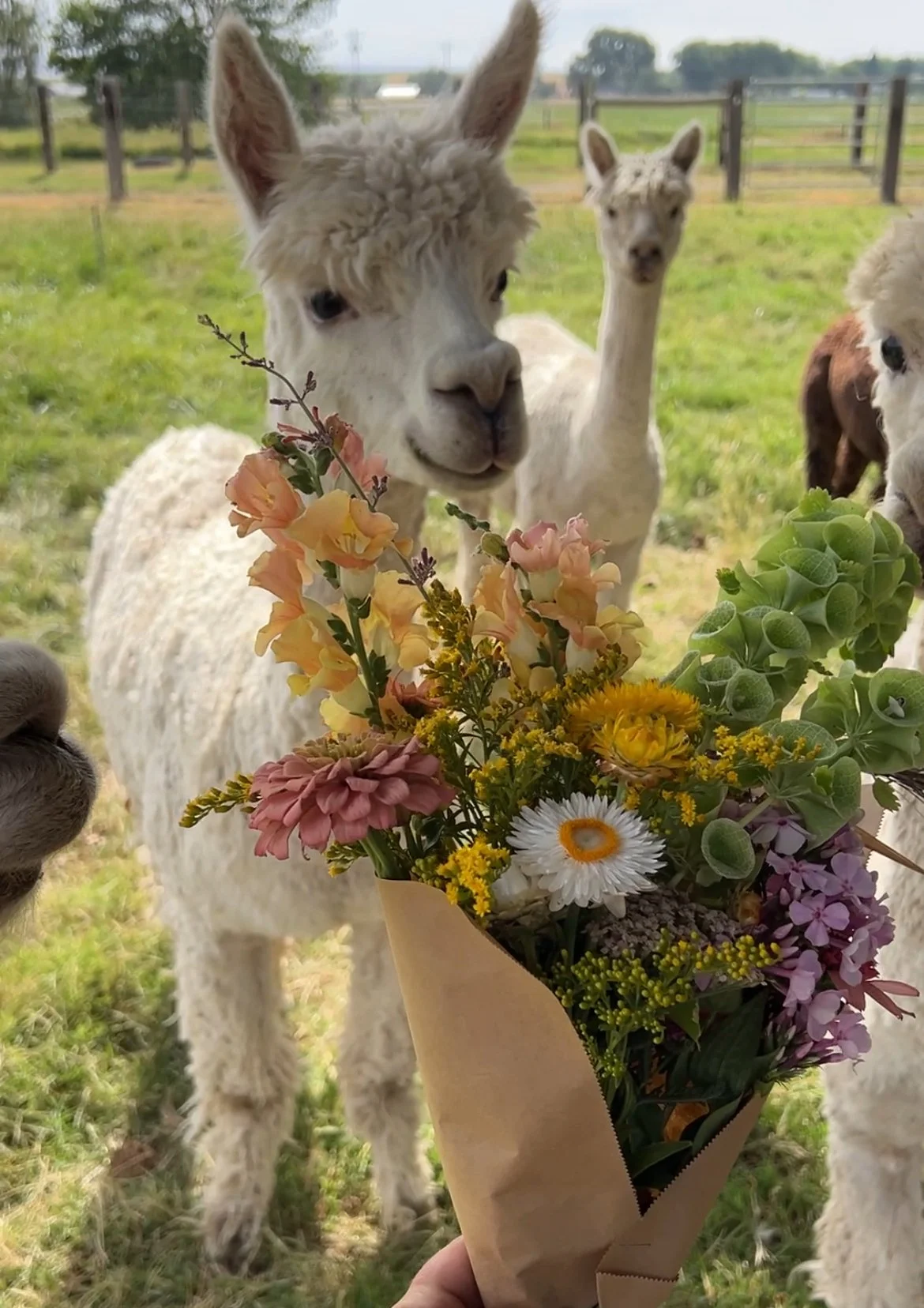
We raise suri alpacas for their fiber ~ long, silky locks with beautiful drape and softness. Each year those fleeces become roving, yarn, and knitwear, all produced as close to home as possible.
For a lot of folks, fiber is how they find us ~ maybe at the farmer’s market, or an event around town, or perhaps after being gifted some yarn.
What you’re really buying, though, is time and care: daily feeding, careful breeding, shearing days, muddy boots, and a long-term commitment to doing this well.
Fiber sales help keep the farm going. They also help fund one of our biggest projects yet.
The Dye Garden: Closing the Loop
Before I planted rows of market bouquets, I planted dye plants.
It started as a simple idea: if our alpacas gave us fiber, could our land also give us color?
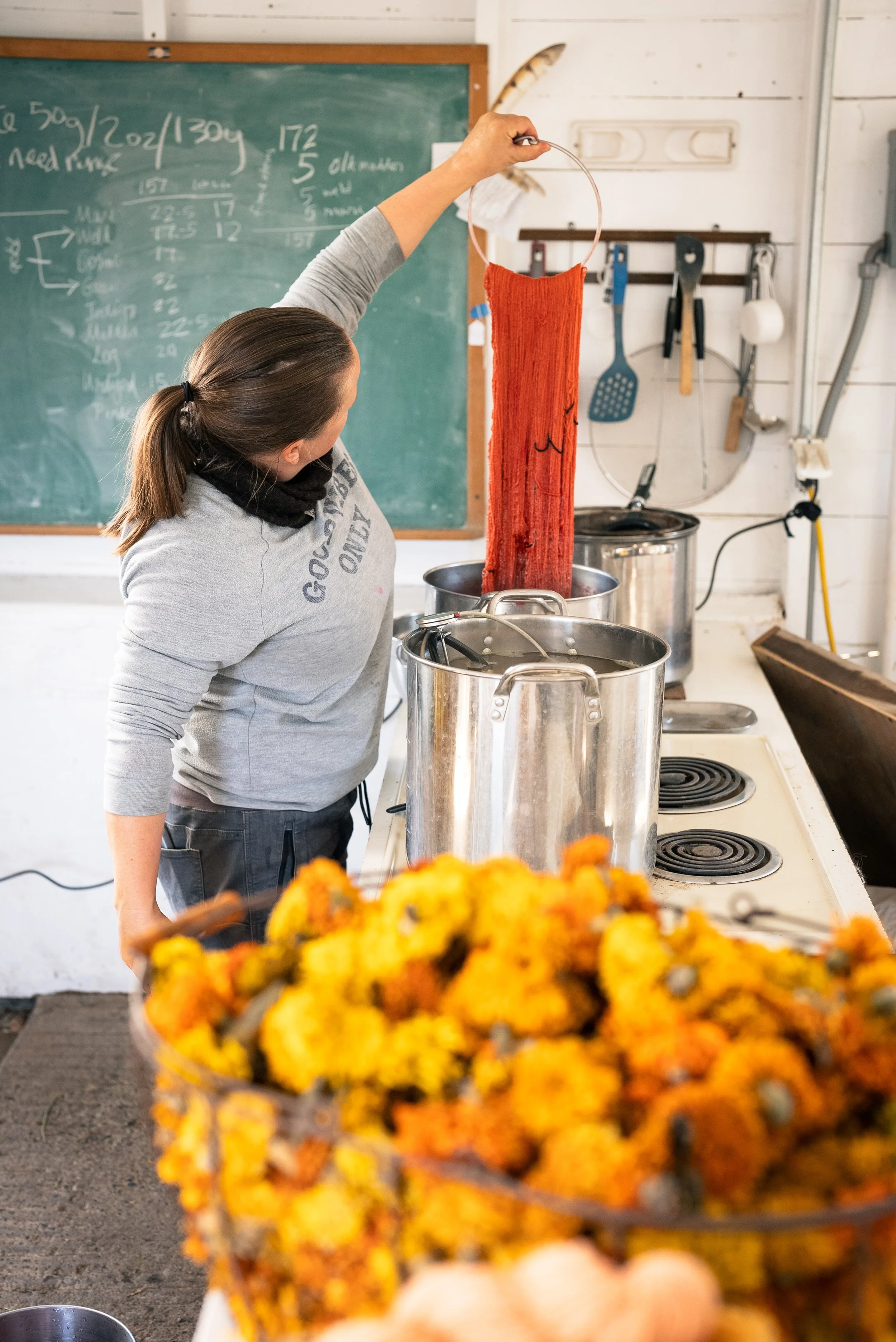
So I tried indigo. Madder. Marigolds. Cosmos. Coreopsis. And plenty of experiments that didn’t quite work.
Those small beds turned into dye workshops, stained hands, simmering pots, and skeins transformed by leaves, roots, and flowers harvested just steps from the barn.
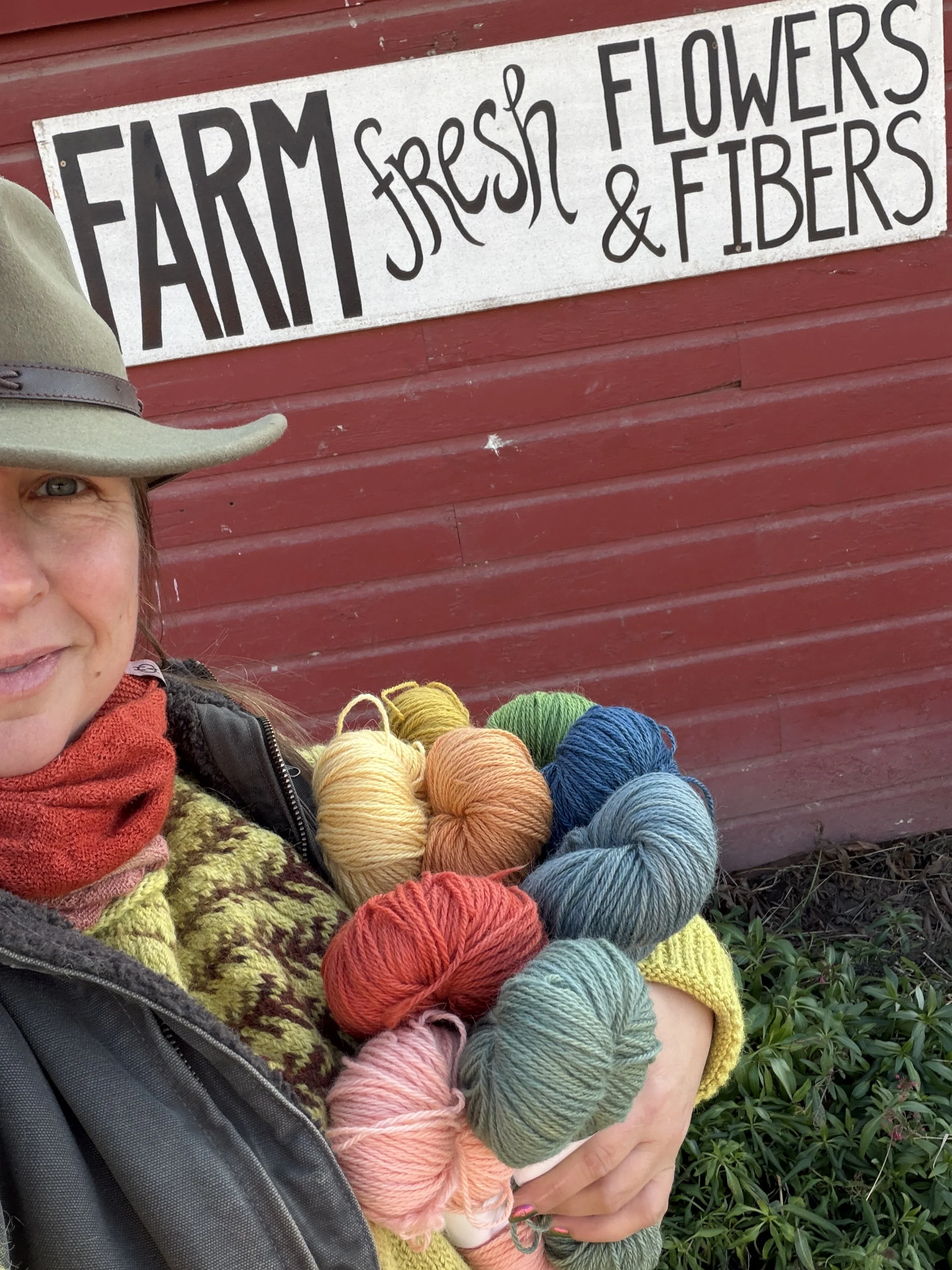
Natural dyeing became a bridge ~ between fiber and gardening, between old techniques and modern makers ~ and it taught me how much I enjoyed growing plants that were both useful and beautiful.
The Flowers: A New Chapter
Cut flowers came after the dye plants, with the first rows planted in 2017 right by the barn before I even picked out a garden spot, but they quickly found their place here.
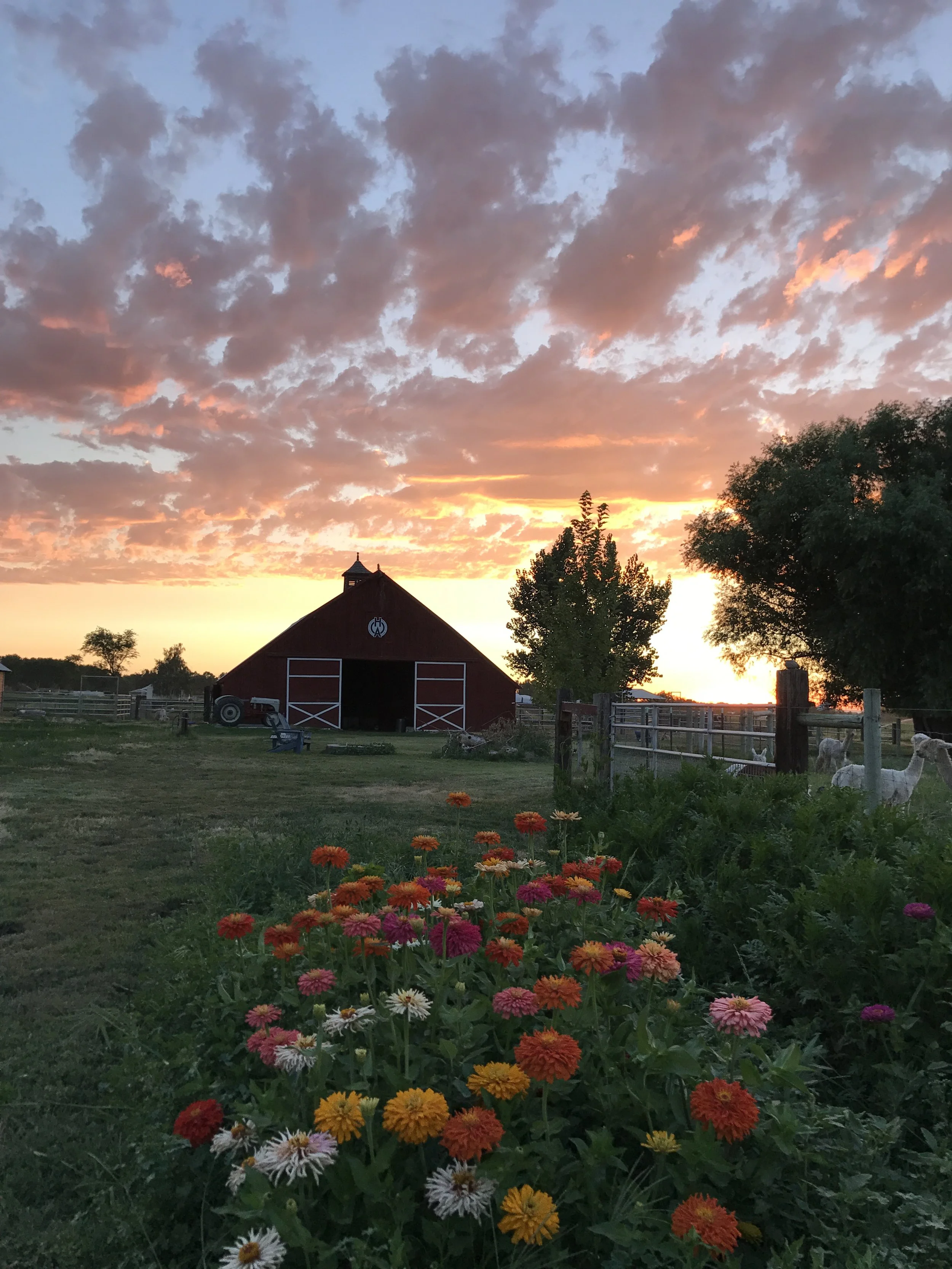
The cutting garden is now a 1/4 acre foot print, but more like 1/8 acre when you consider pathways, that’s alongside the farmhouse and our neighbors.
I’ll have to do a separate post on the neighbors soon ~
But now that the cutting garden is planted, it’s part of the farm fabric. Daffodils are the first to sprout in spring. Followed by peonies in May. In a great year, ranunculus, too!
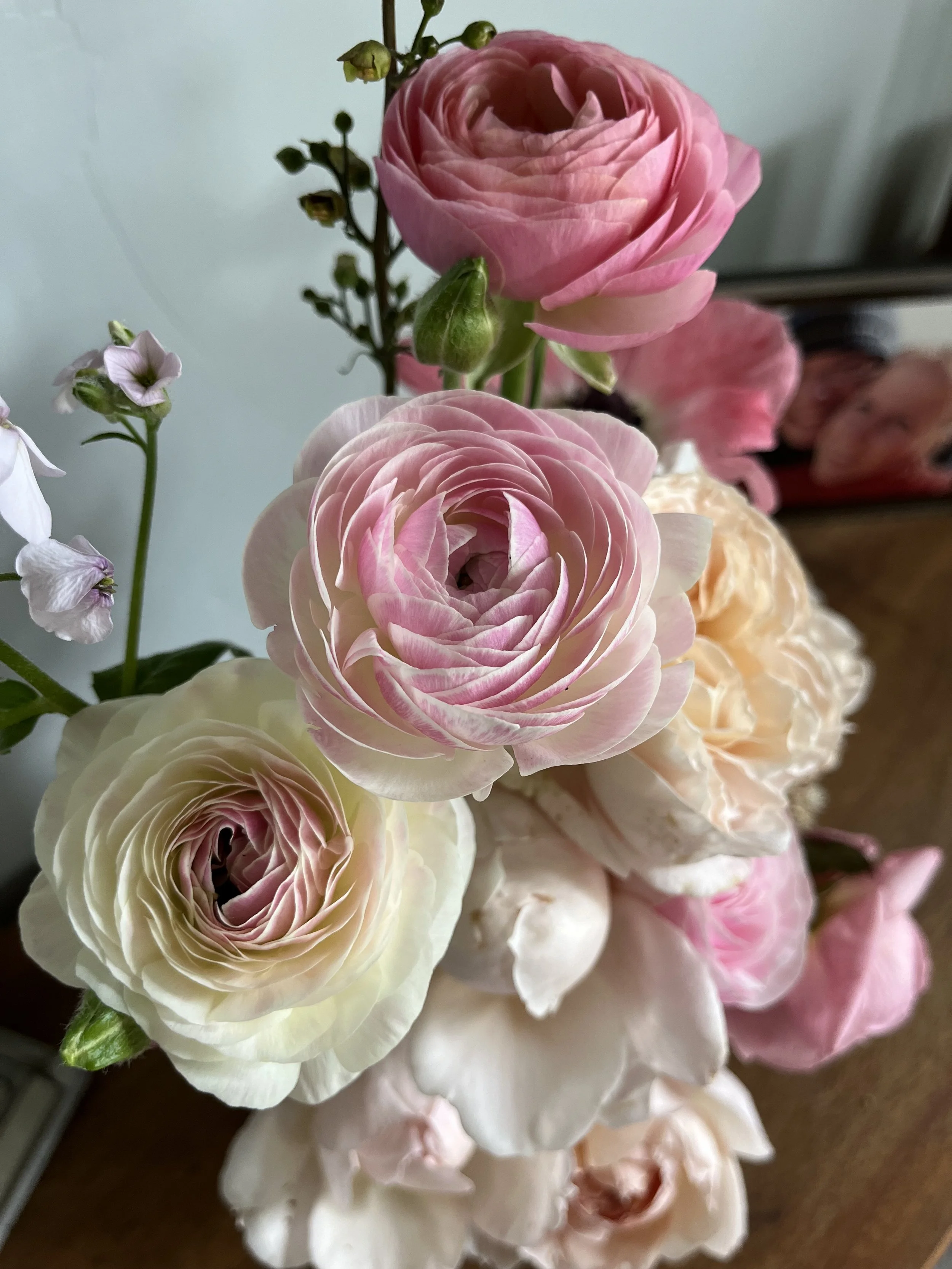
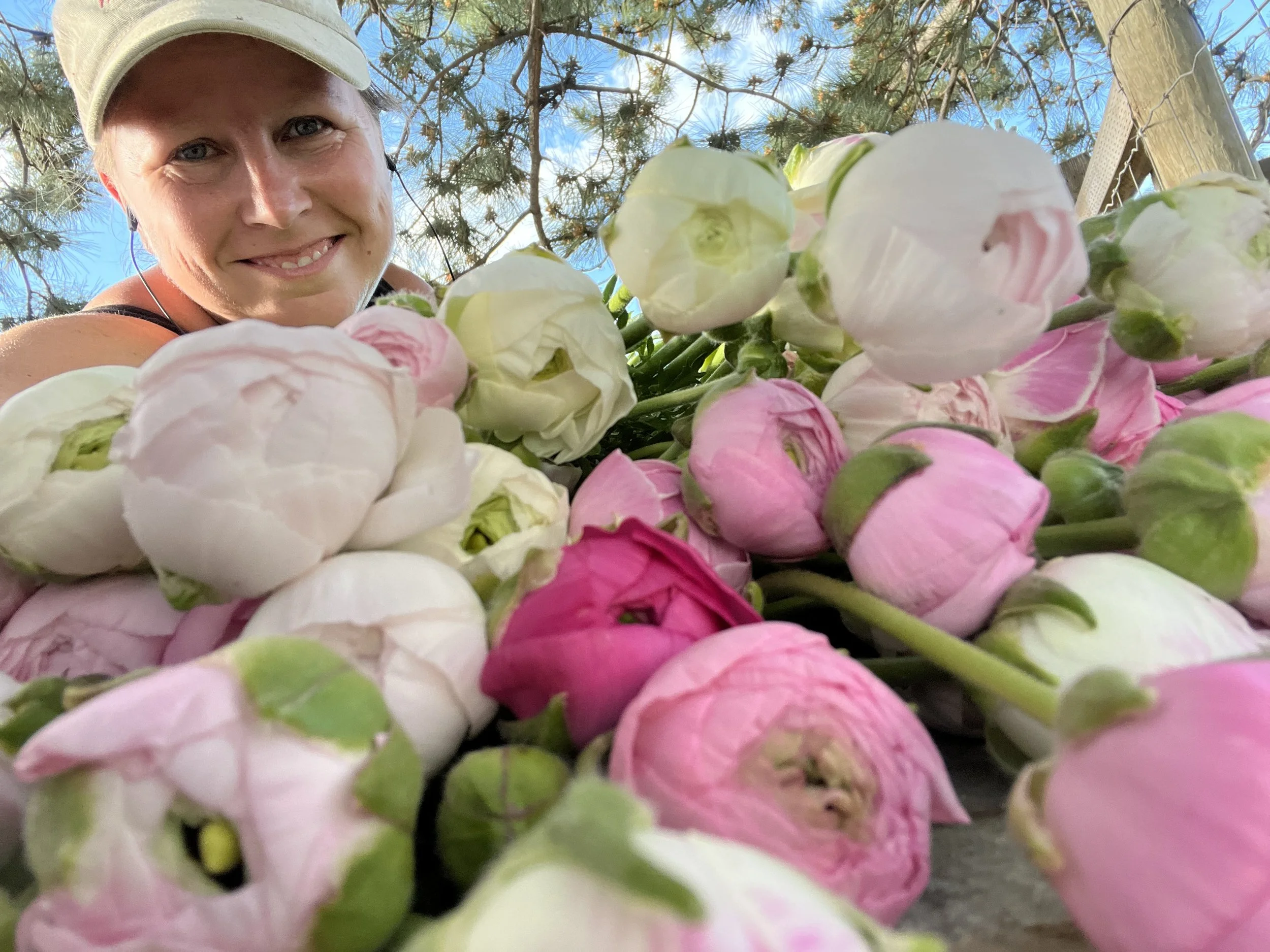
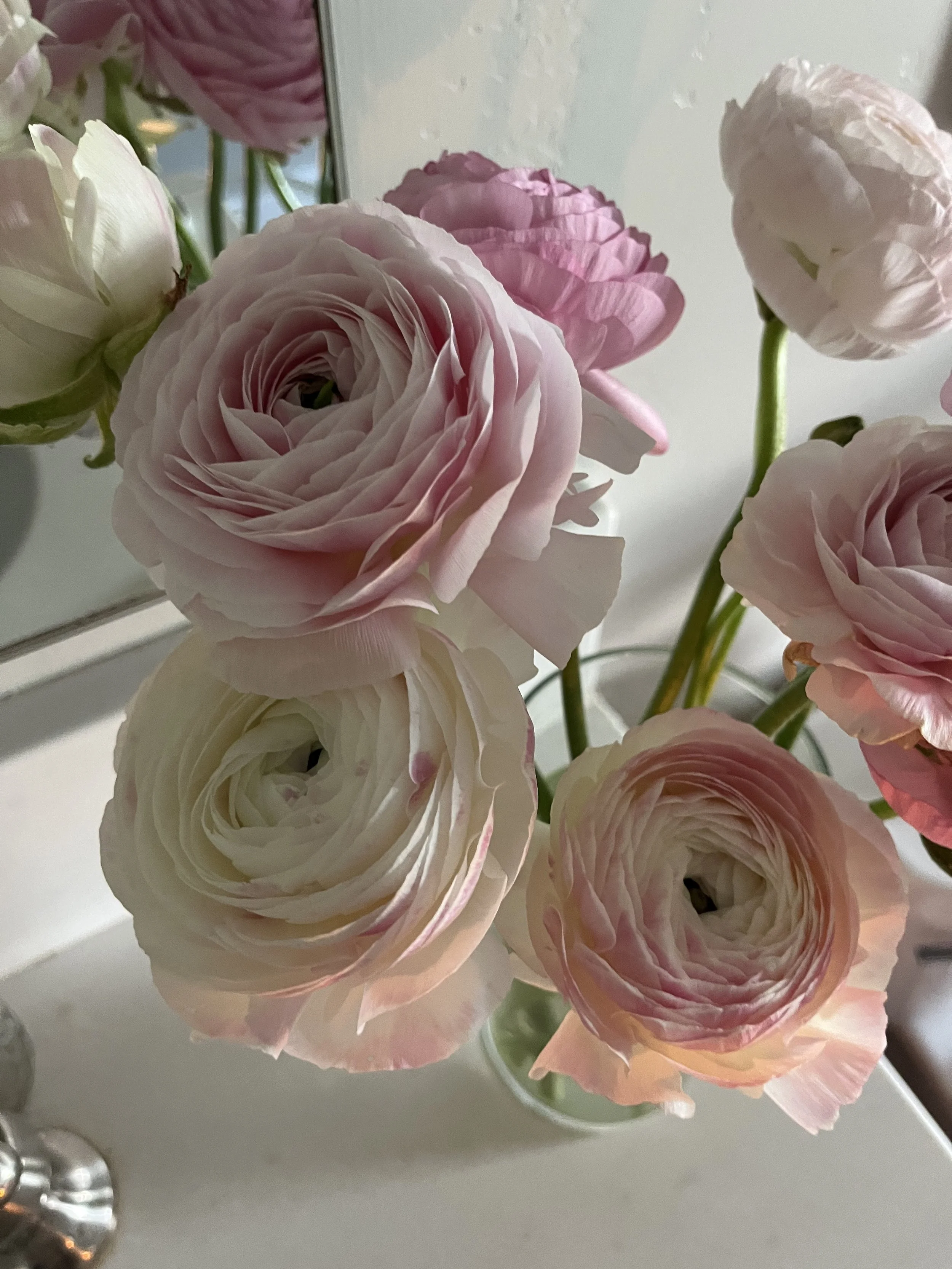
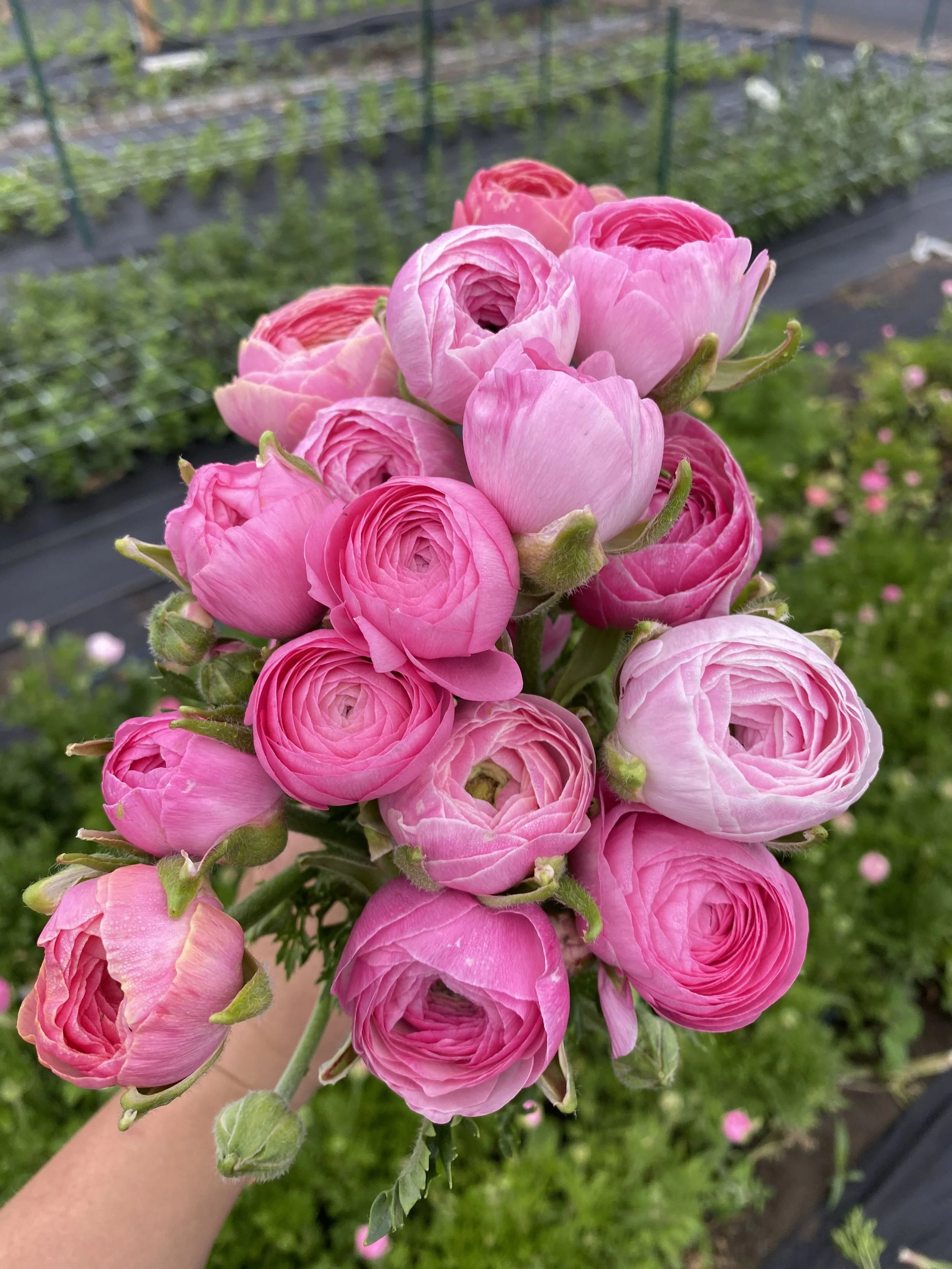
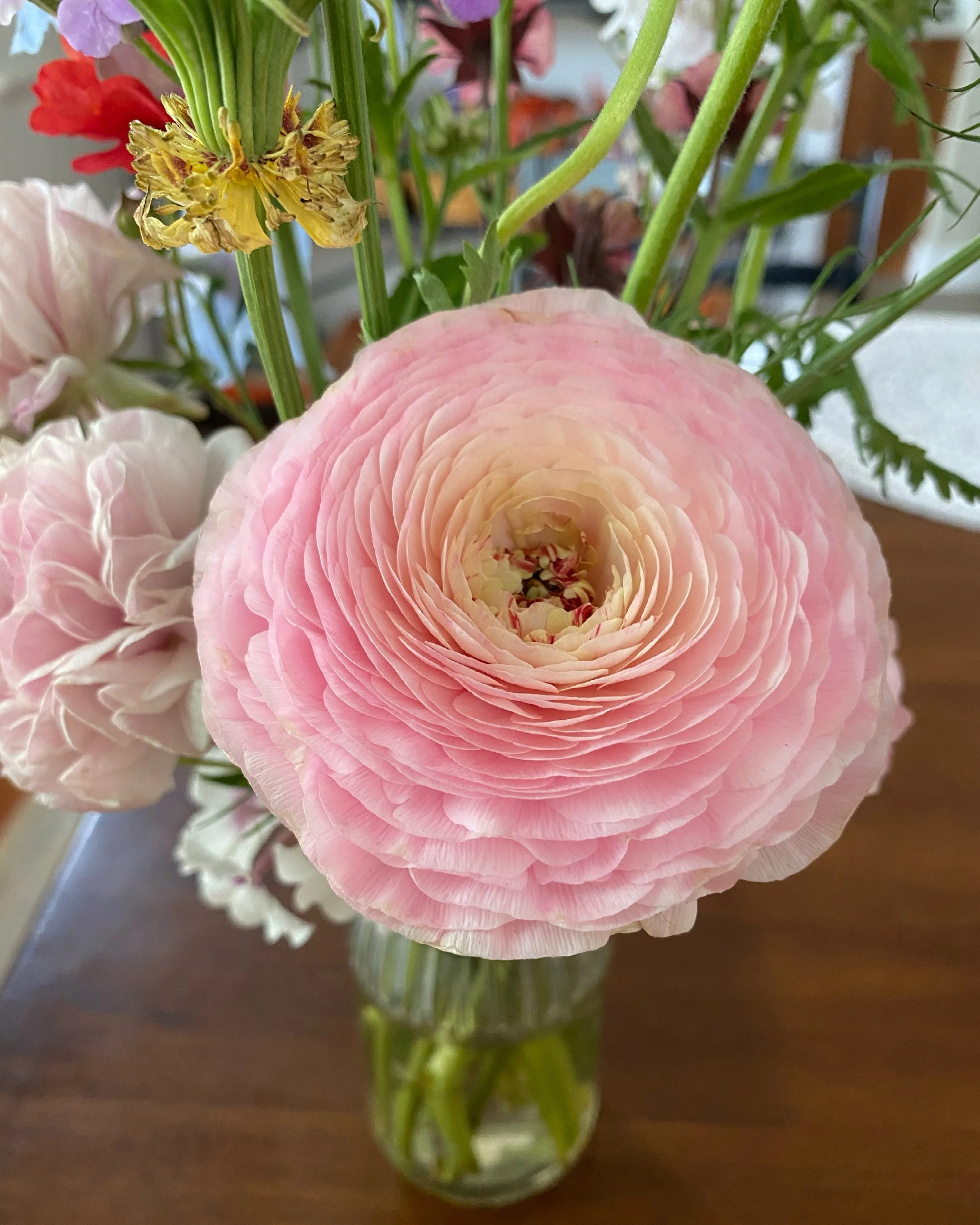
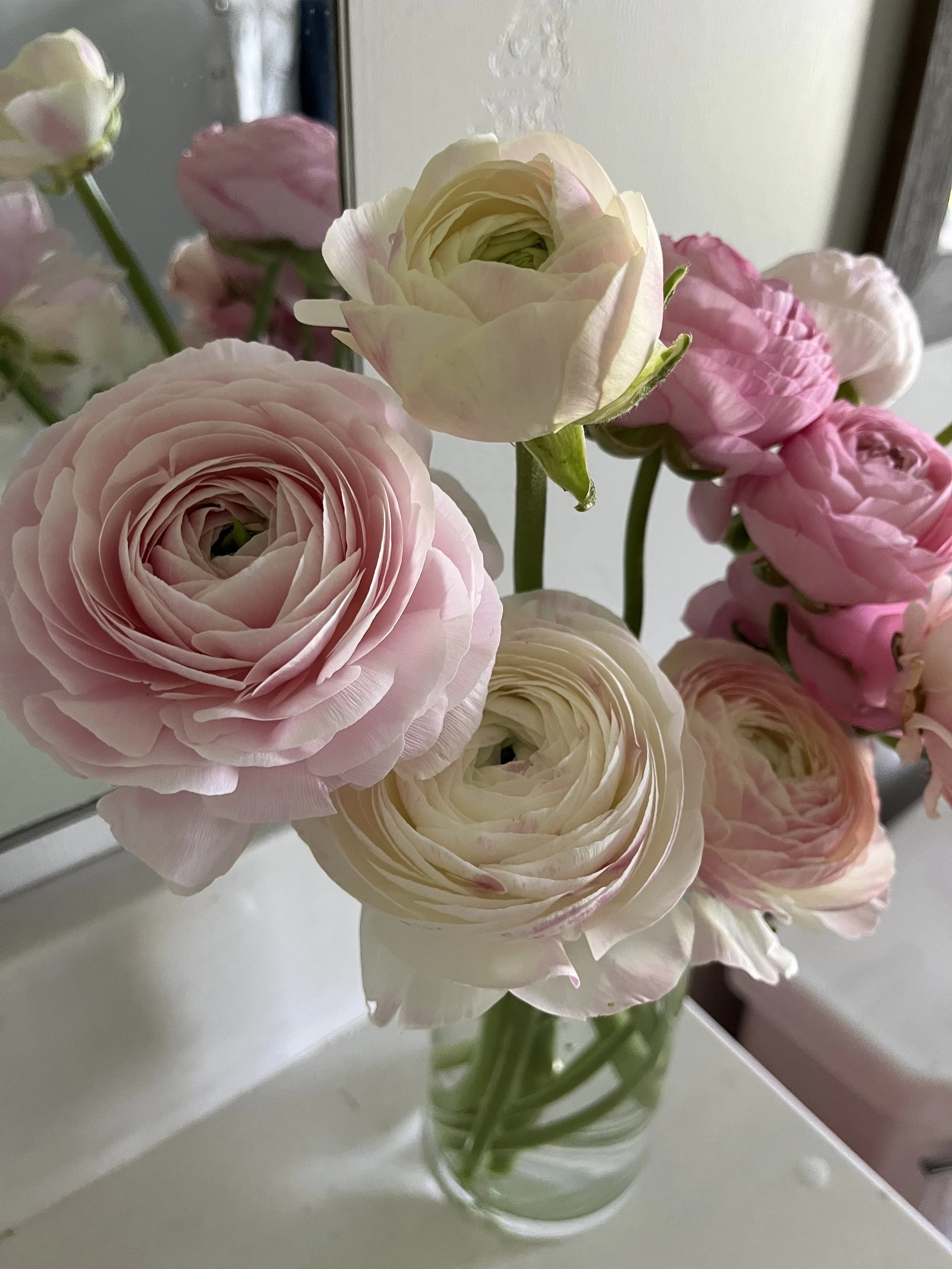
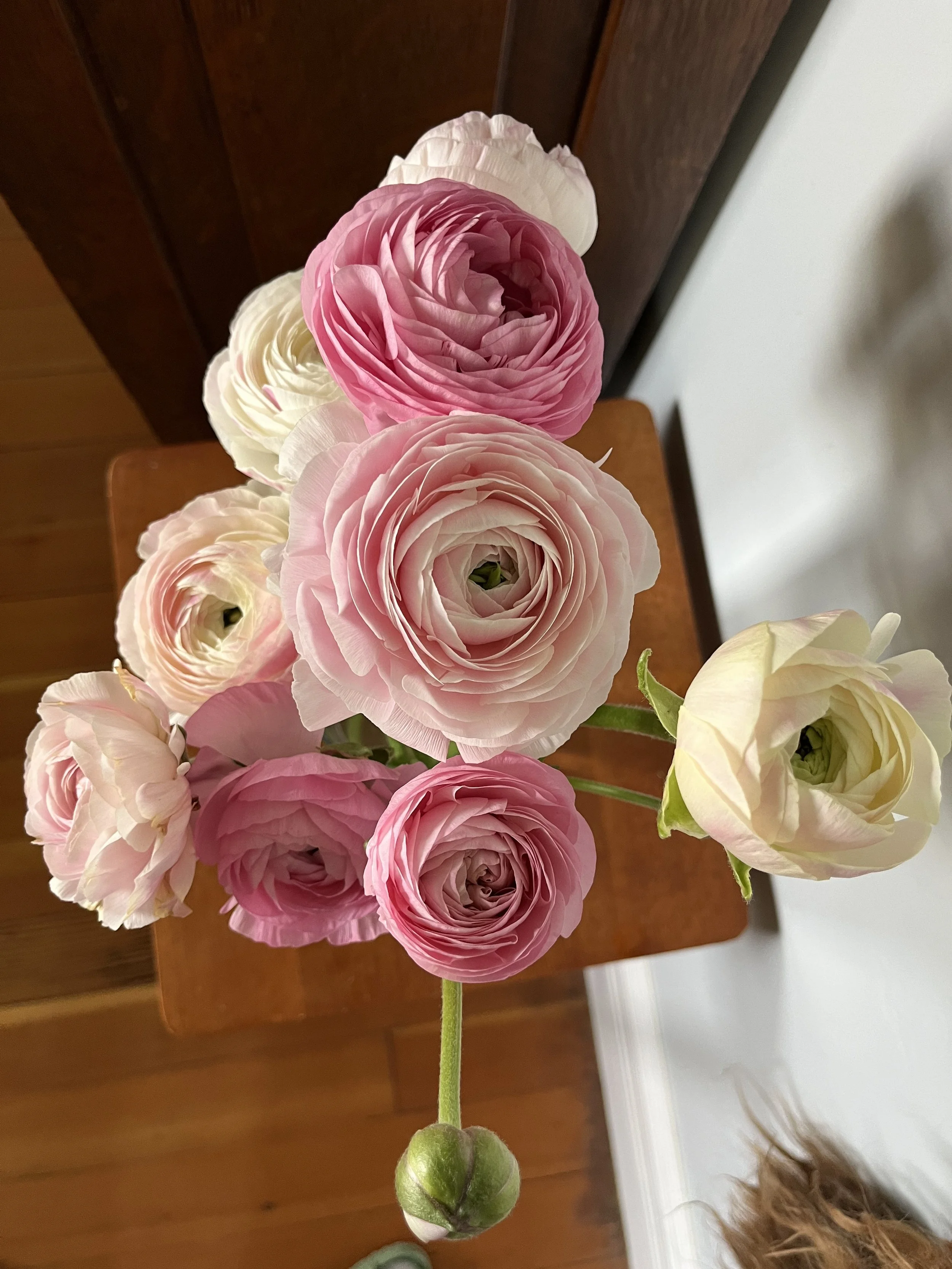
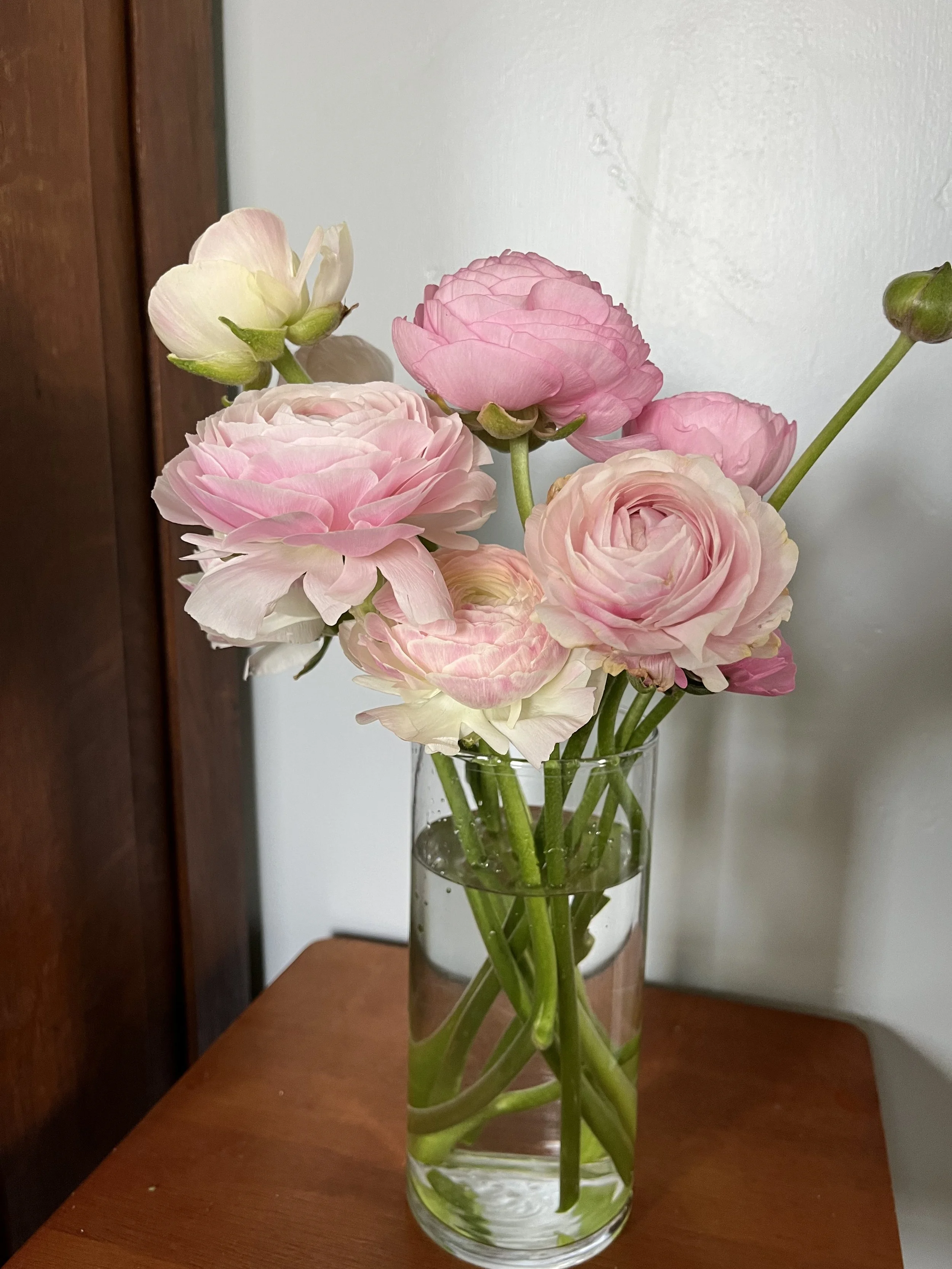
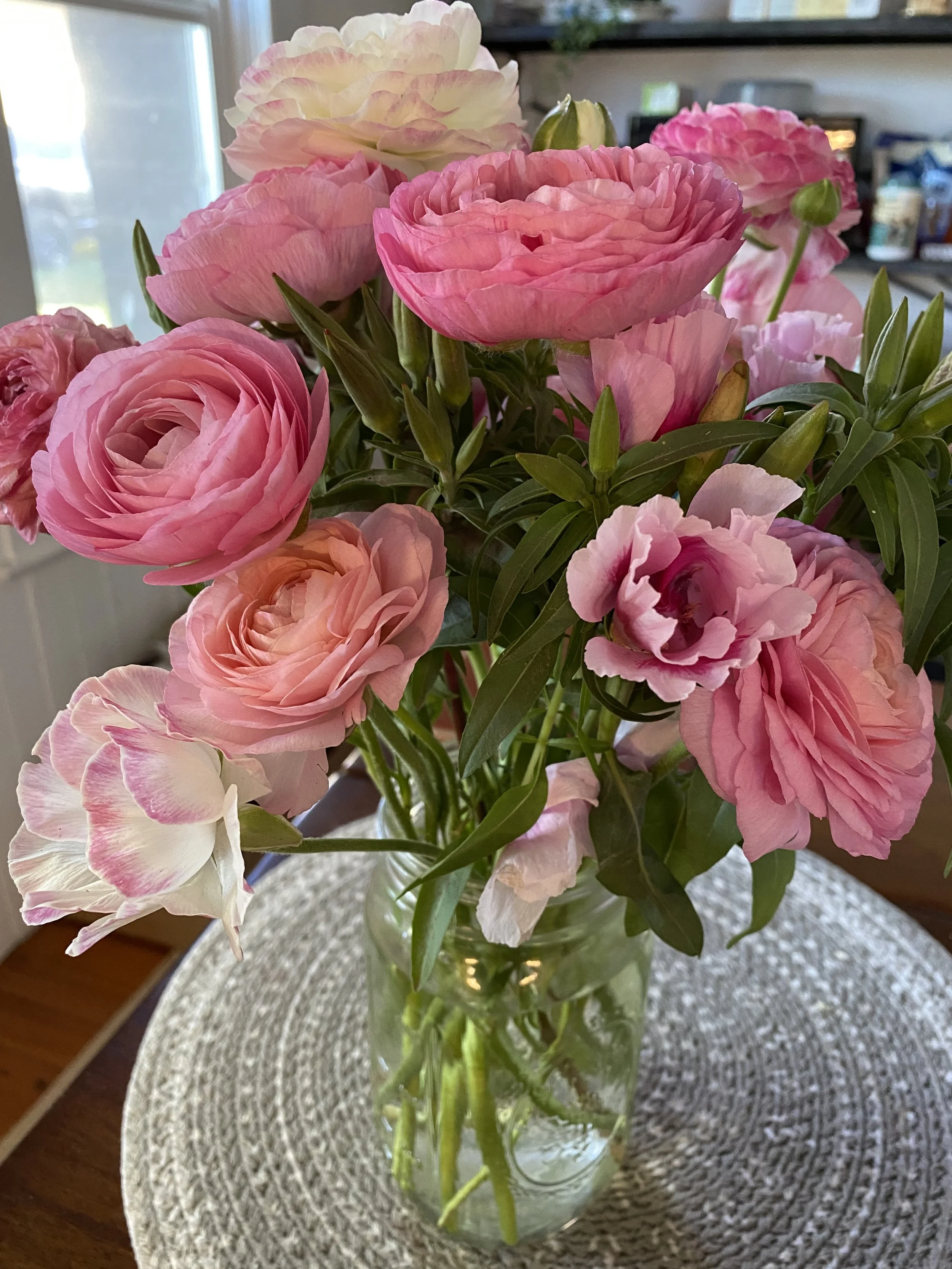
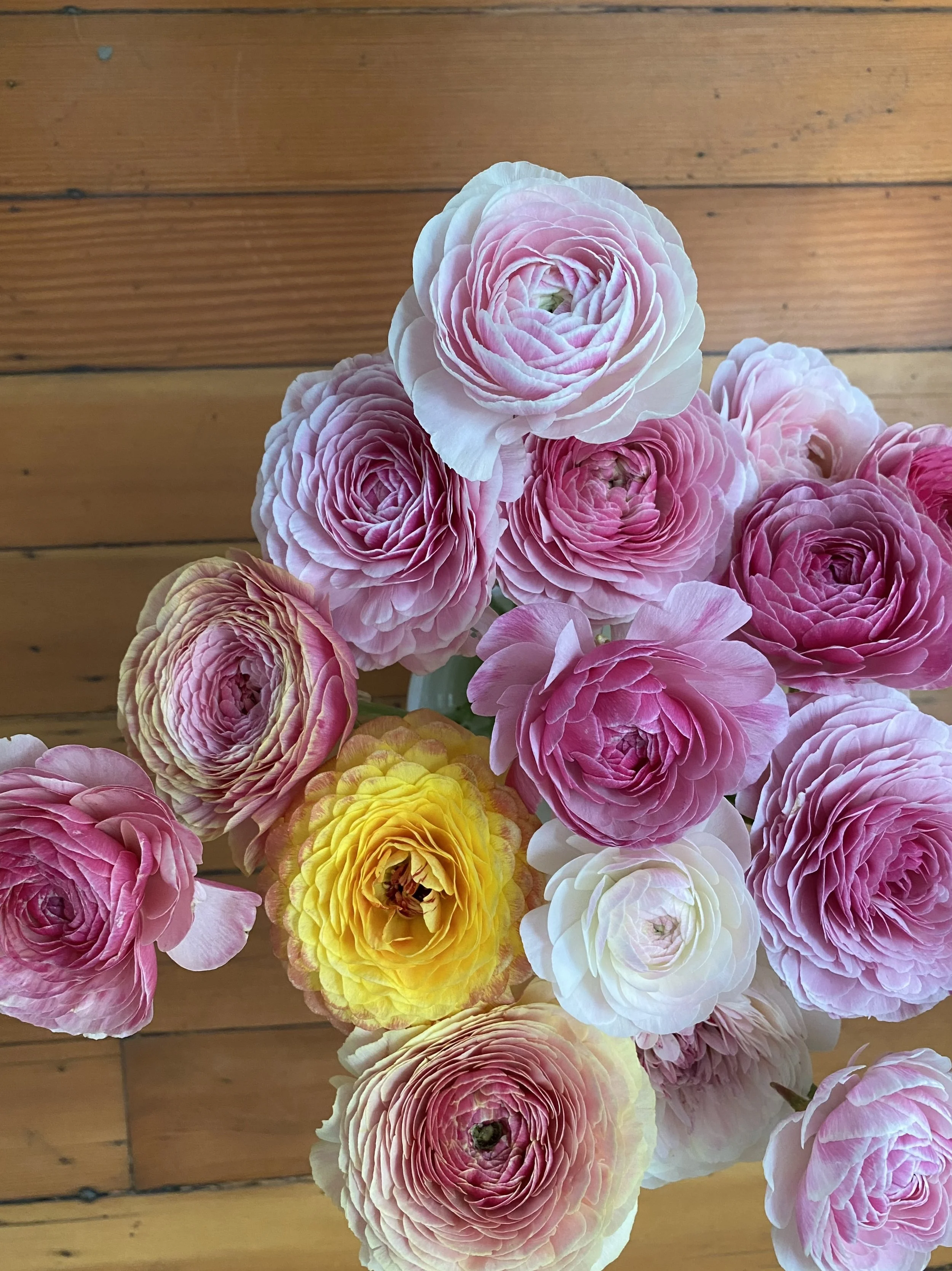
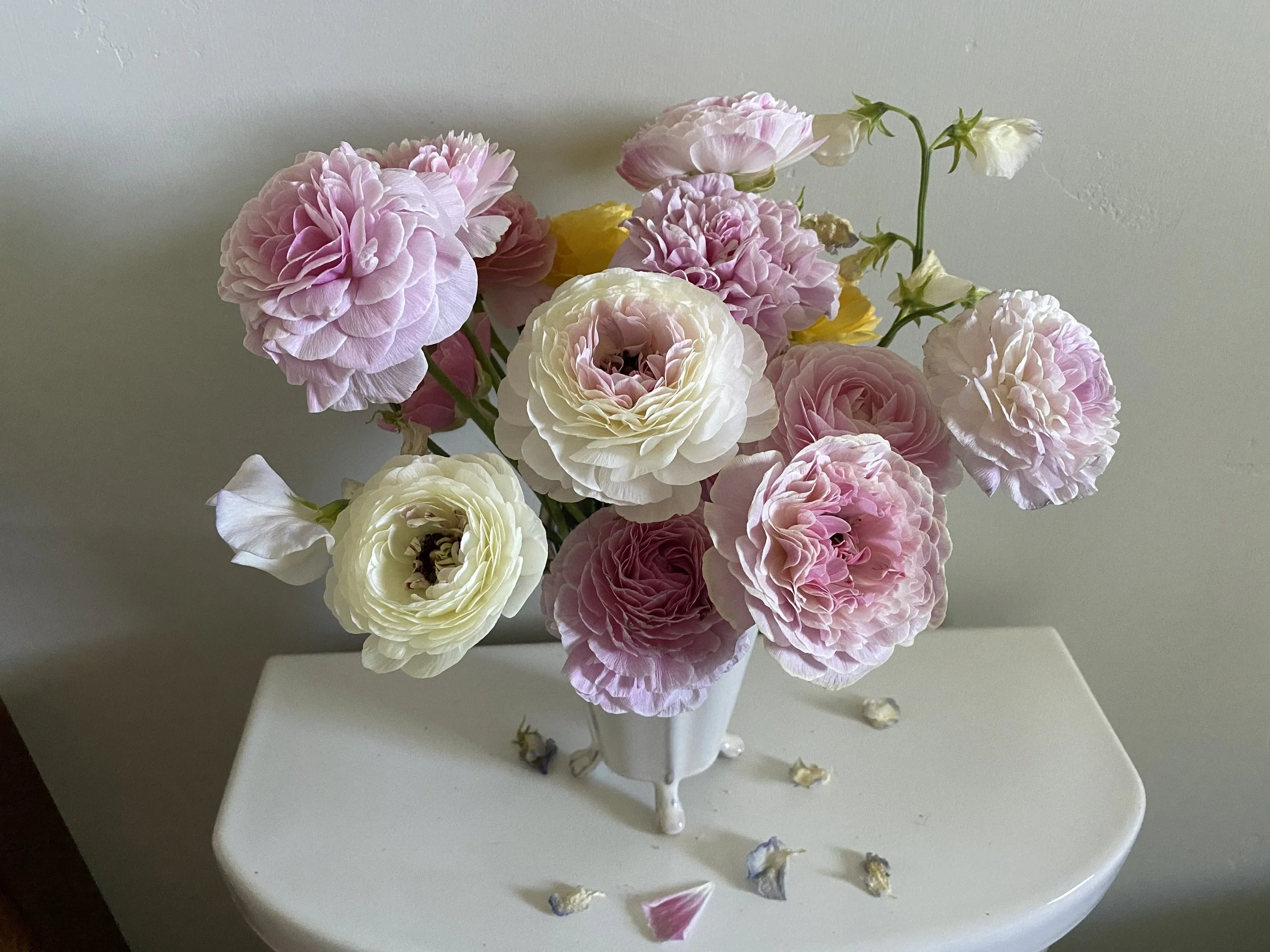
Then our amazing collection of garden roses start churning out fragrant blooms in early summer.
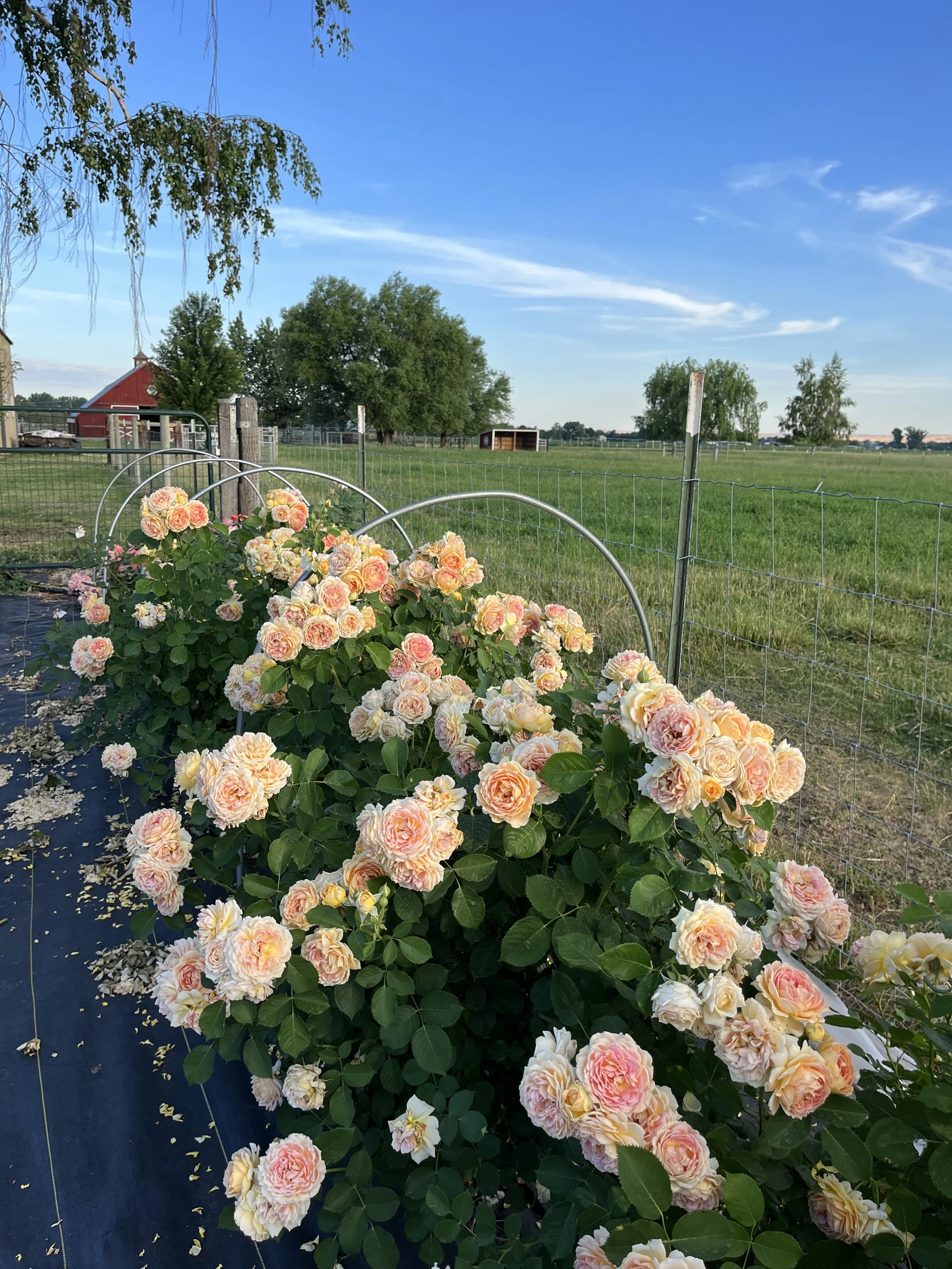
By midsummer all the favorites are on display — zinnia, celosia, cosmos, sunflowers, and, of course, dahlias.
My signature bouquets always have that ‘wildflower’ look, but every variety is planted with intention and care.
Most often, you can snag one of my bouquets from my snazzy ‘flower cart’ at the downtown Walla Walla farmers market, every Saturday from May through October.
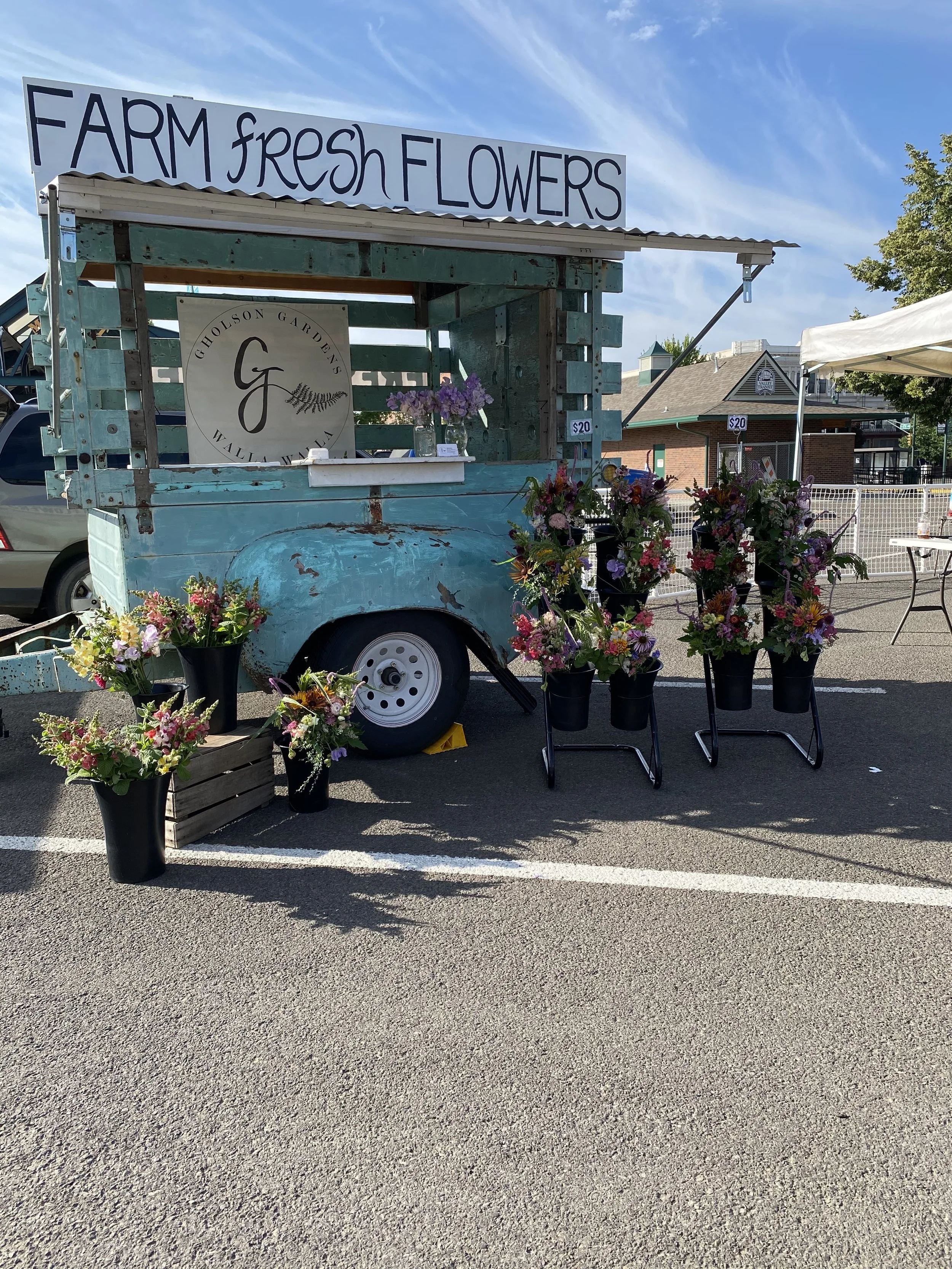
Or you can join my ultra small, Flower Share, which runs like a Community Supported Agriculture (CSA) program, where I deliver one to your home, office, restaurant or winery tasting room in Walla Walla or College Place every Friday during the blooming season.
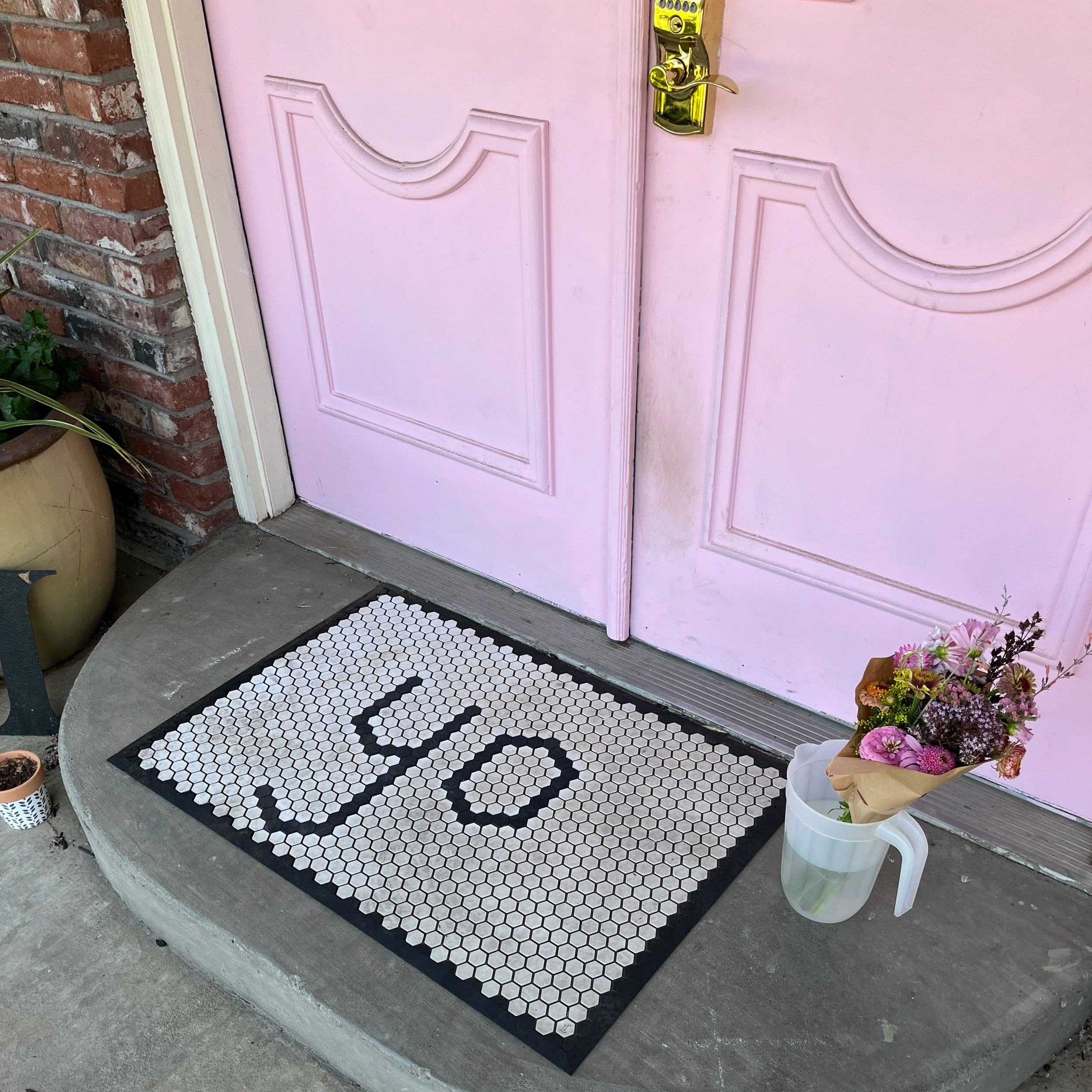
But I love it when folks come to the farm for a pick up ~ which I’ll be doing more this year due to our big project.
These farm pick ups bring new people to the farm ~ often folks who didn’t think they were “farm people” until they found themselves standing next to an alpaca with a bouquet in hand.
Flowers don’t last long, and that’s part of the point.
They mark seasons.
They celebrate milestones.
They give us another way to support the farm.
The Barn: The Big Project in the Middle of Everything
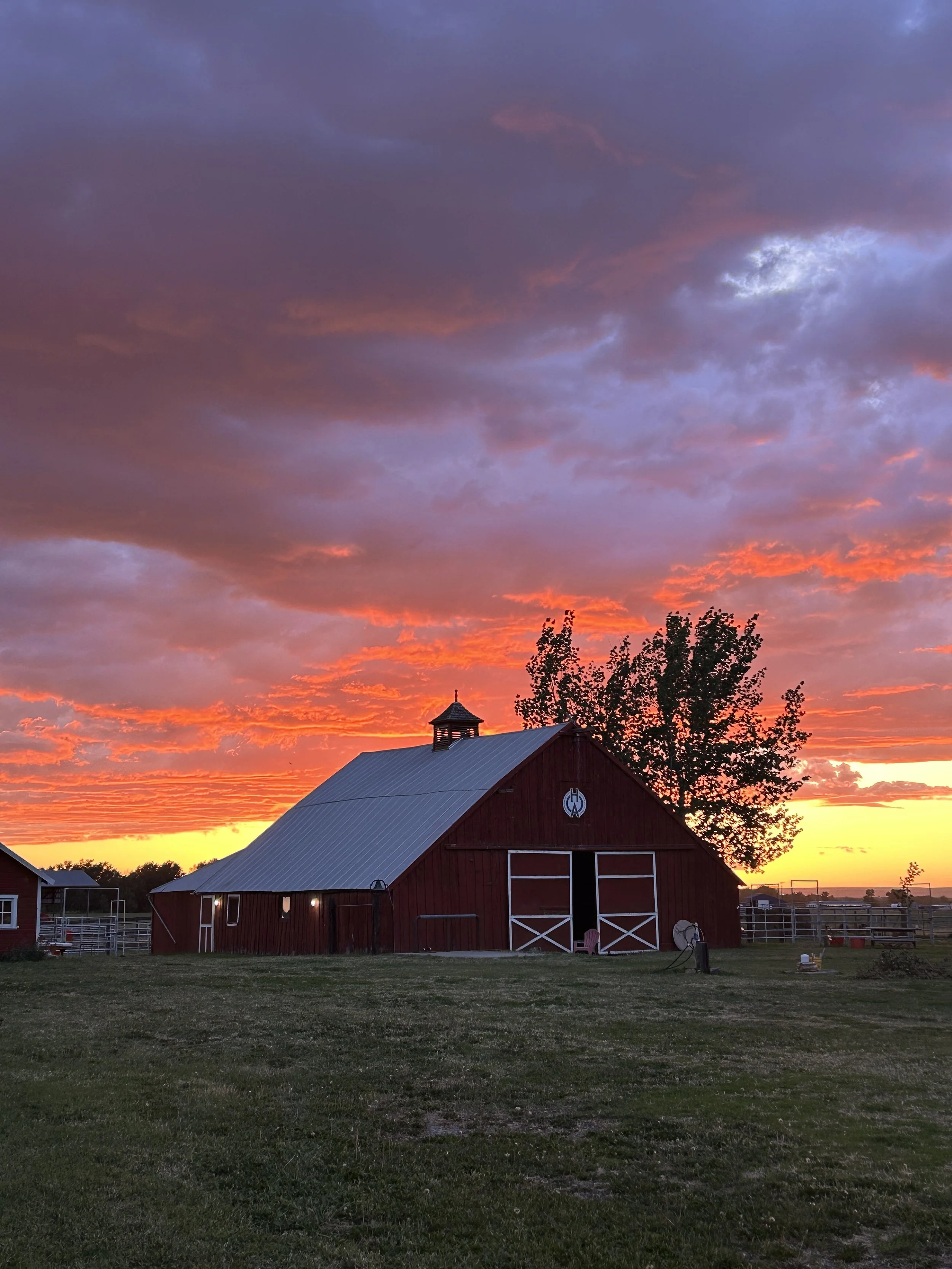
At the center of all of this is our barn.
It’s 156 years old, and it shows—in the best ways and the challenging ones. Over the last year we invested in engineering and design work, and now 2026 is our full-focus year: every extra dollar the farm earns is going toward making sure this historic barn can keep doing its job for decades to come.
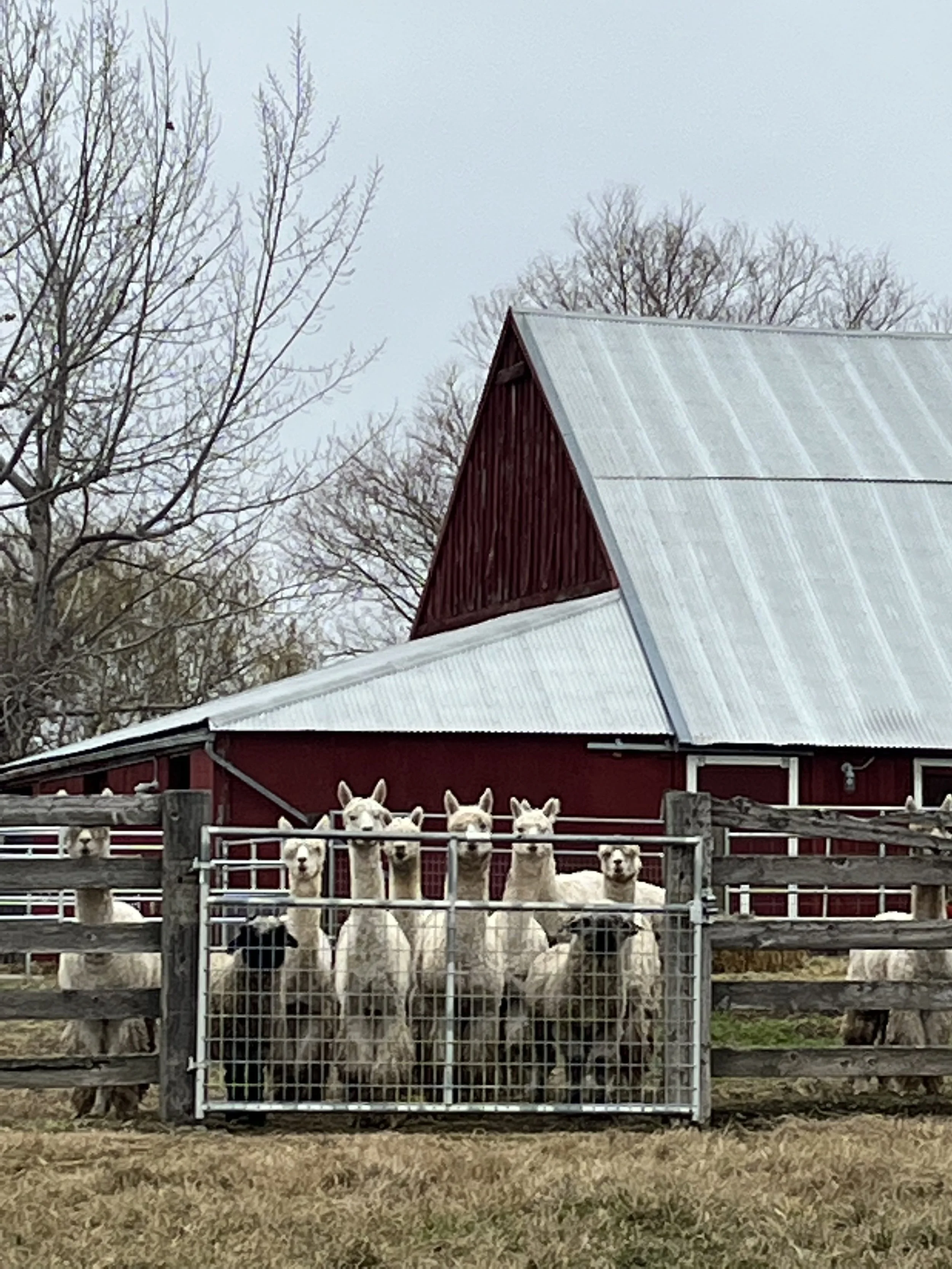
When you buy yarn.
When you pick up flowers.
When you come to a farm & floral workshop.
You’re helping make that possible. We’re literally raising the barn, realigning the roof, pouring a founding, and building a new south wall, amongst other things.
We chose the name Gholson Gardens for this part of the farm on purpose. Nathaniel and Louisa Gholson were the original homesteaders on this land, and when we began growing dye plants and later cut flowers, it felt right to honor the people who worked this ground long before us. Keeping their name attached to what grows here now is our small way of acknowledging that we’re just the current caretakers in a much longer story.
The Third Crop: You
The most important thing we grow isn’t alpacas or plants.
It’s people.
Every season we open the gates for specific days and events:
Natural dye workshops.
Peony and rose fundraisers.
Yoga with Alpacas.
Petals & ’Pacas meet-and-greets.
Private tours and School Groups.
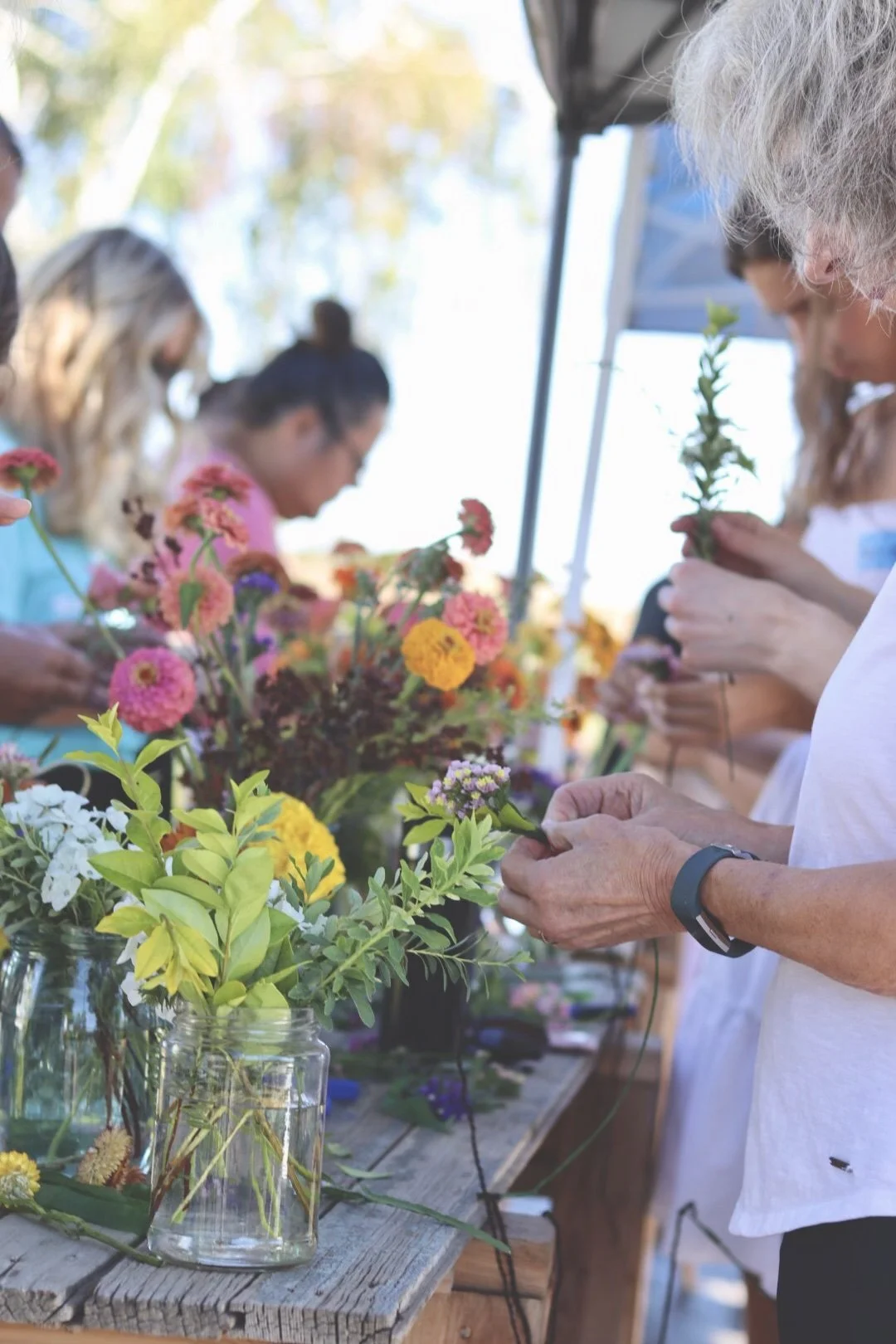
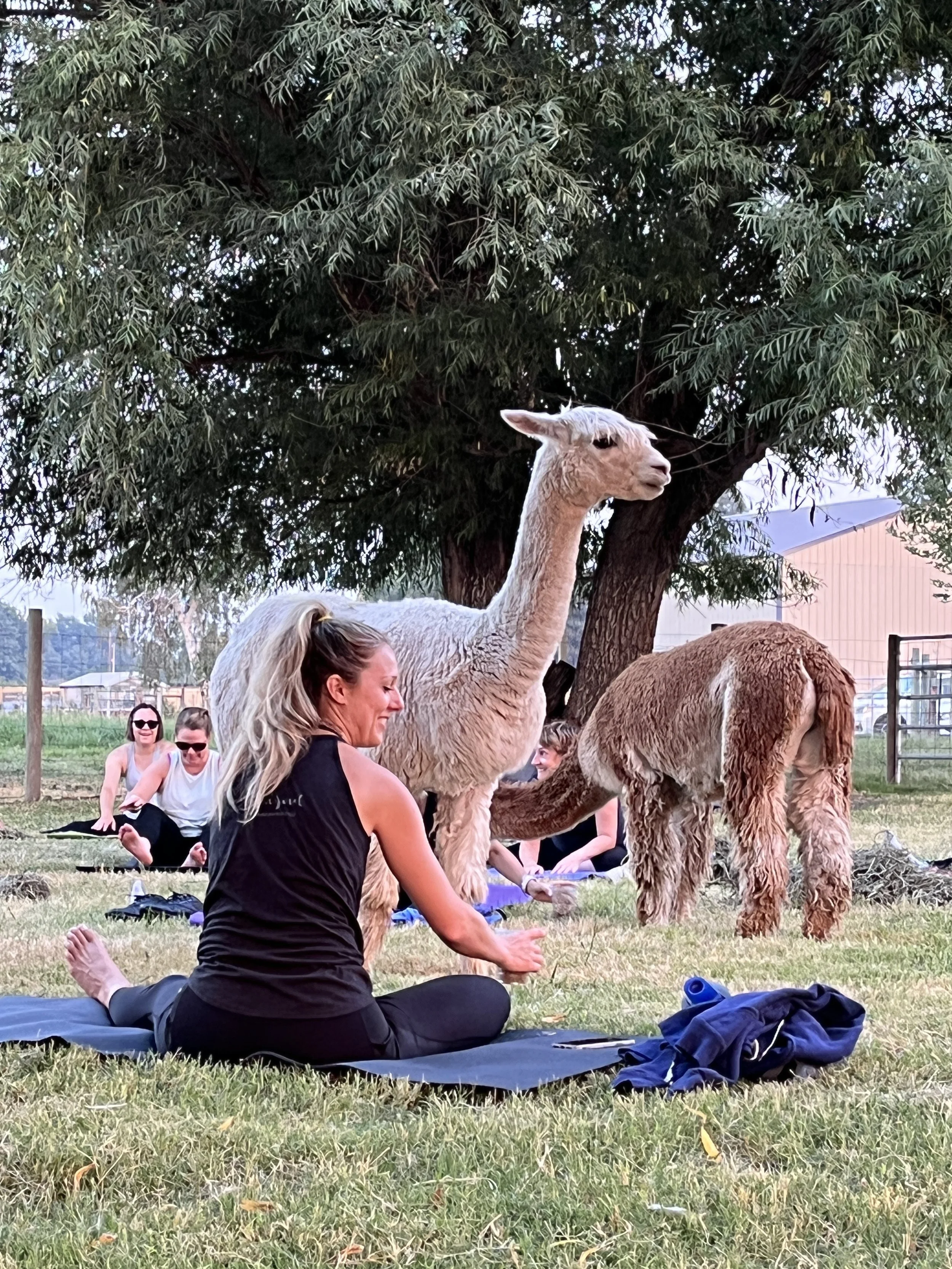
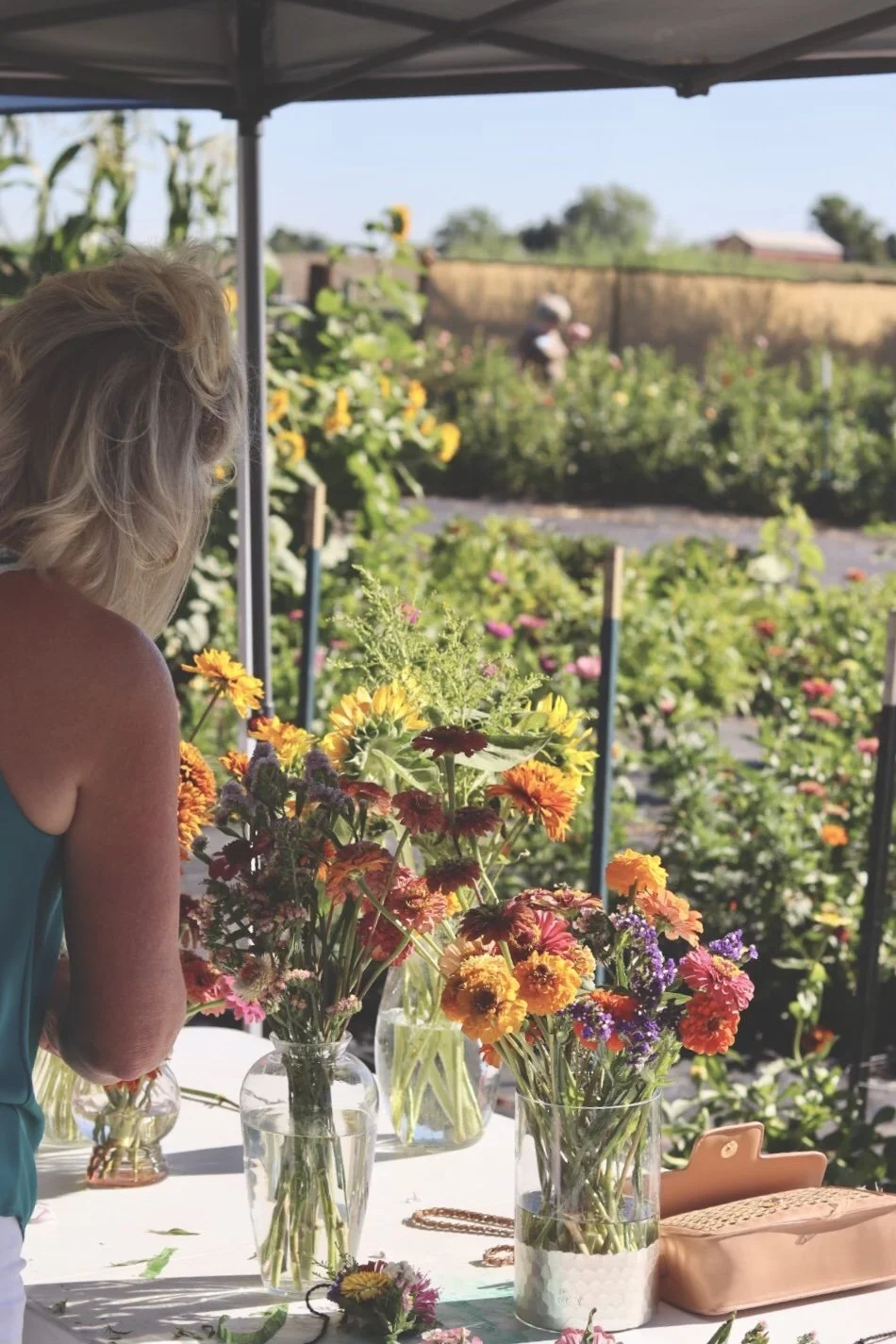
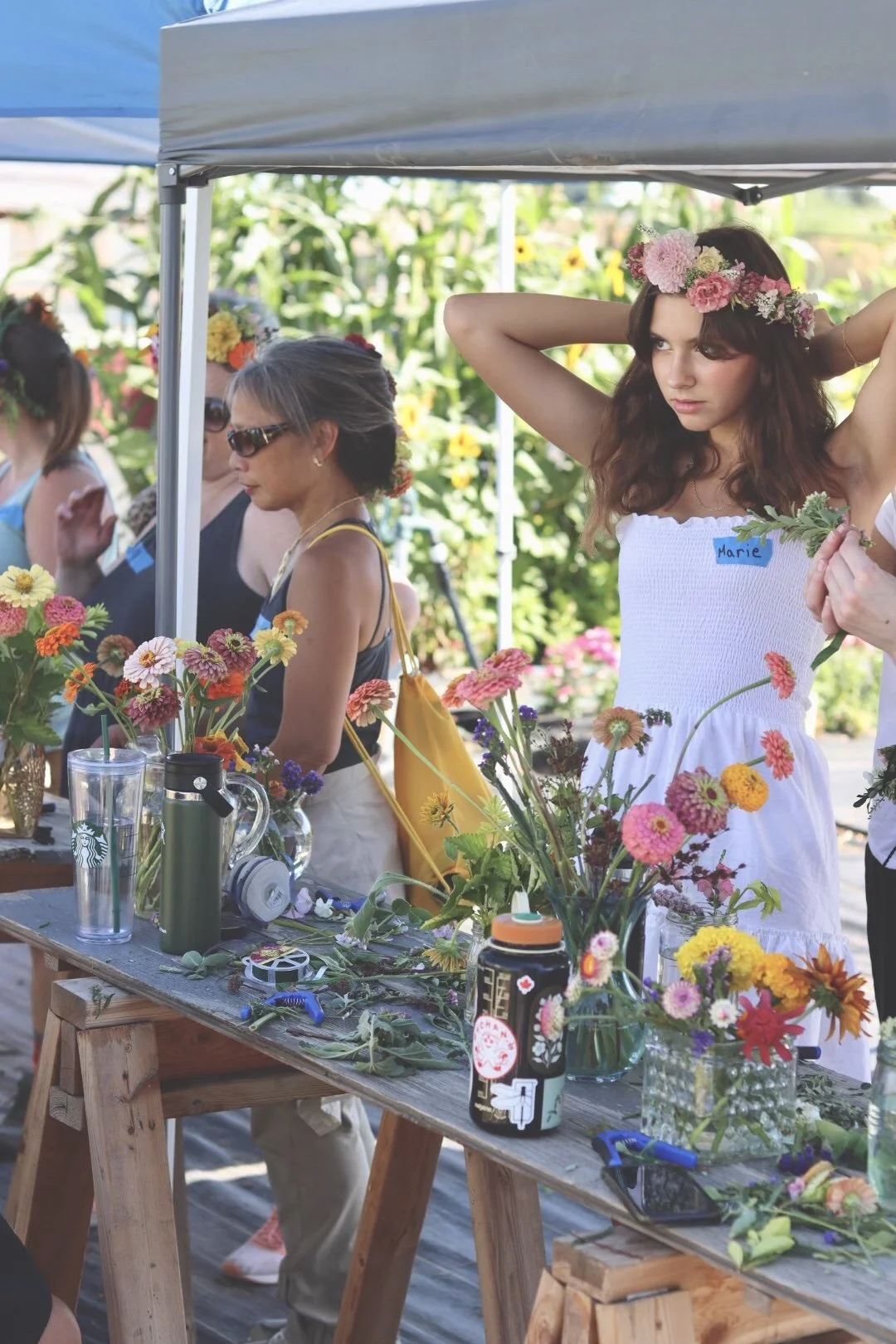
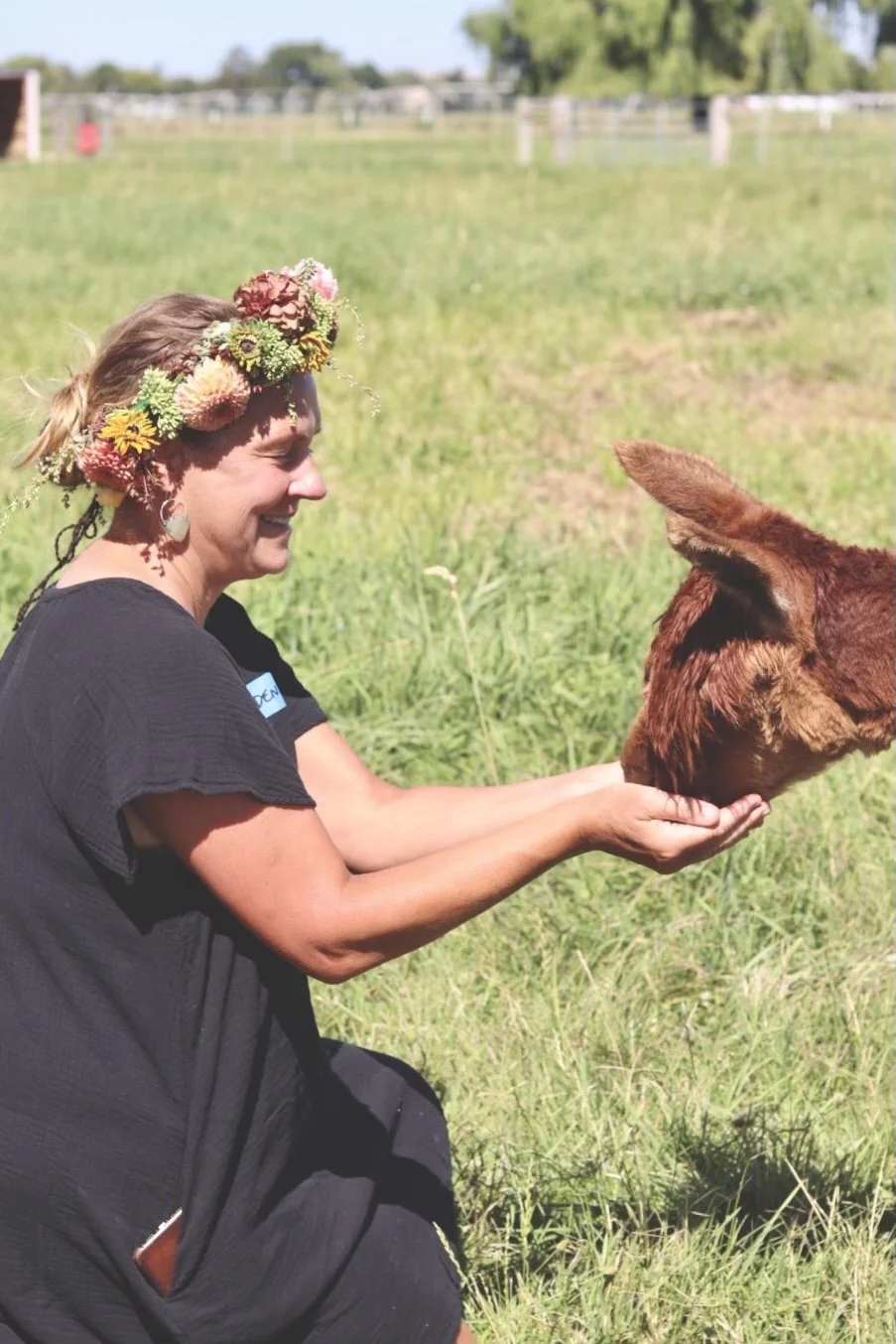
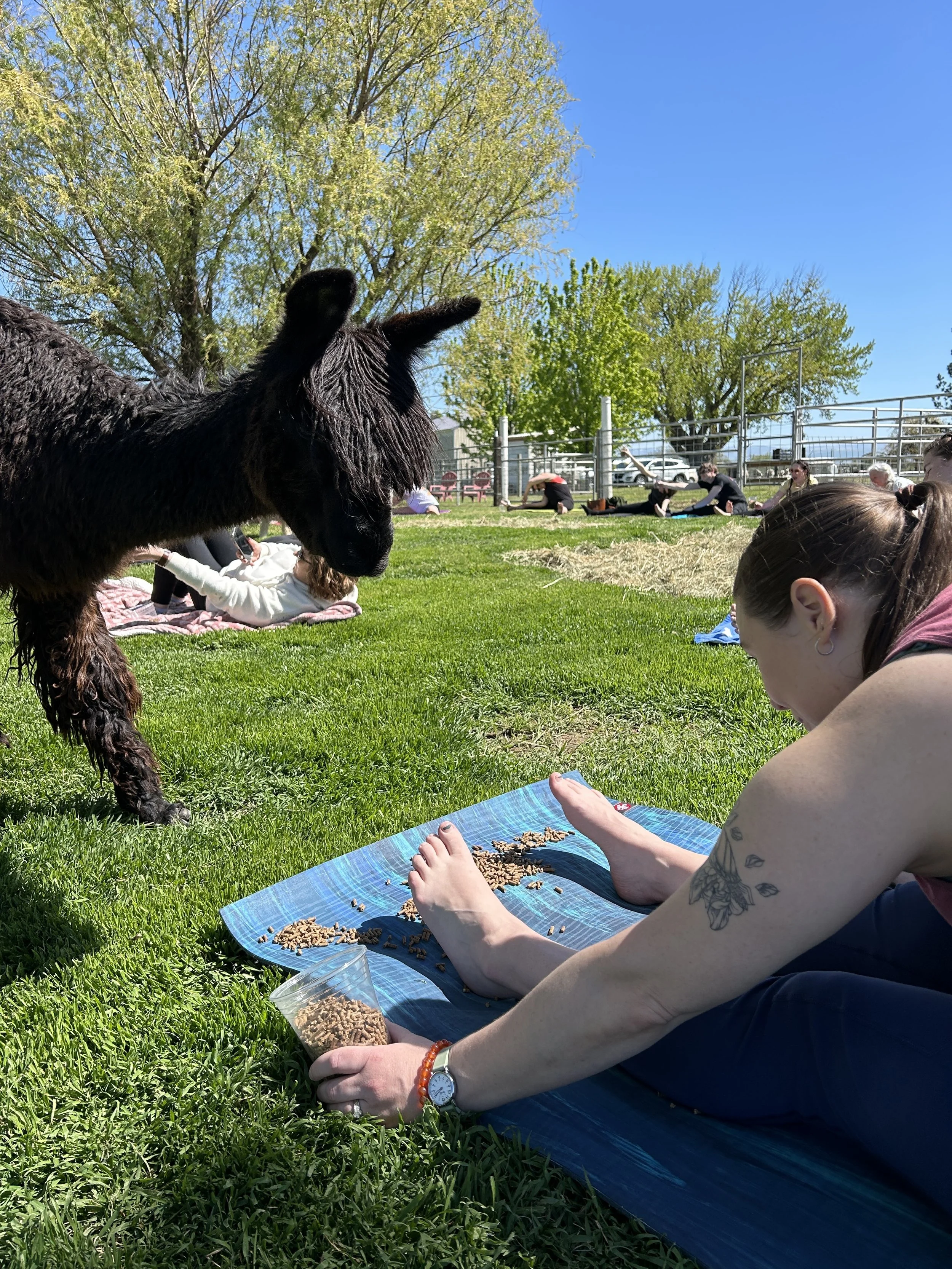
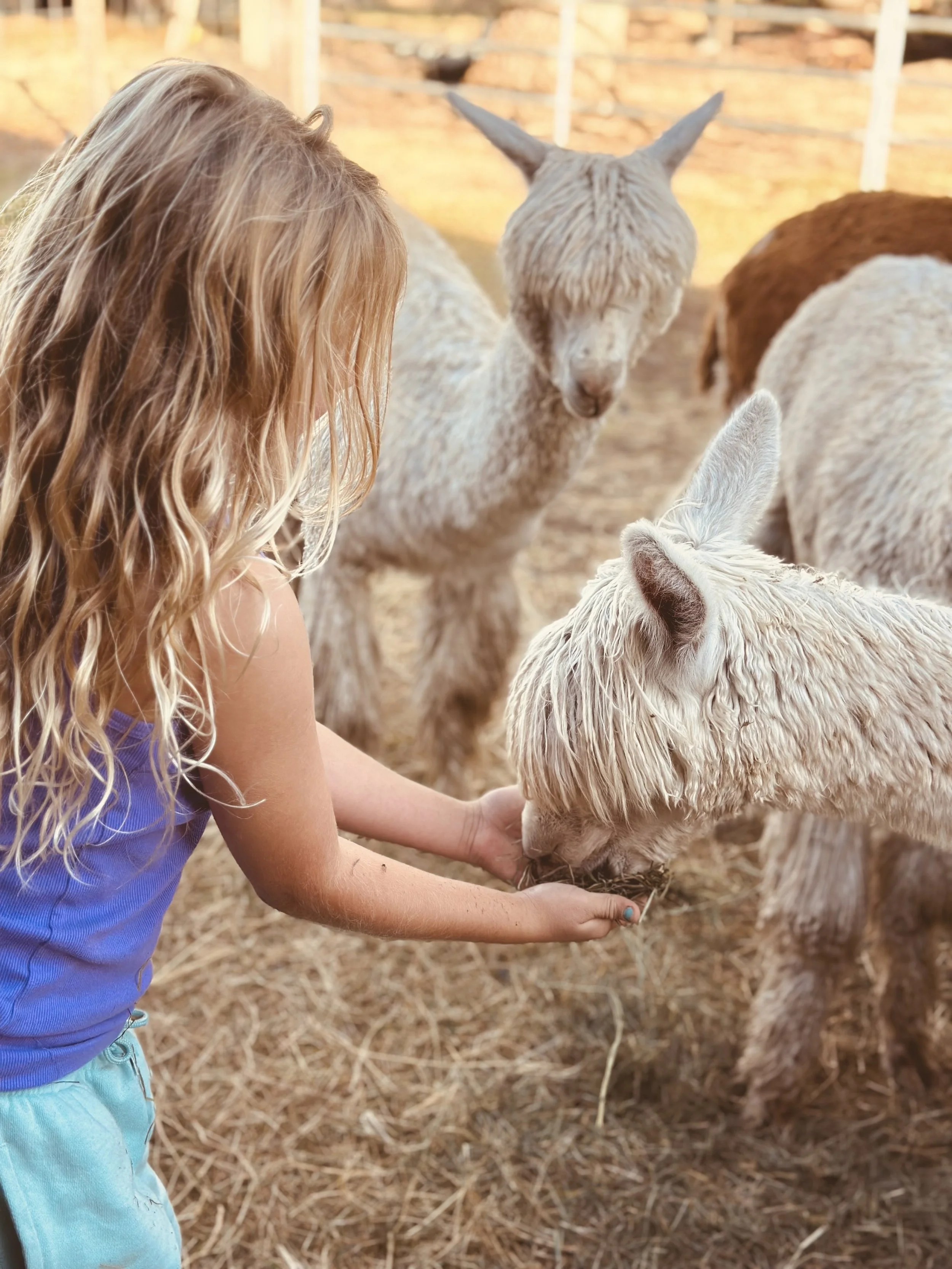
Some folks come because they knit. Others because they garden. Some just want to meet an alpaca.
A lot of them come back.
They ask about certain animals by name. They follow along with the barn rehab. They tell their friends. They plan their calendars around bloom time.
That’s what keeps this place going.
Why We Run the Farm This Way
This isn’t the simplest way to farm.
It means juggling shearing schedules with bloom times. Watching the weather while answering emails about workshops. Figuring out how to save a historic building while running a modern small business.
But it also makes us more resilient.
It connects everything.
And when a big project shows up—like repairing a 19th-century barn—we don’t take it on alone. We take it on with people who care about where their yarn comes from, how their flowers are grown, and why old buildings matter.
Come Be Part of It
If you’ve been following along from afar, consider this your invitation.
Come to an event.
Pick up a bouquet.
Try our fiber.
Watch the barn rehab unfold.
And if you’d like first notice about workshops, markets, and knitwear releases, be sure to join our email list.
We’d love to see you here.